Sewage Cleanup Services in Philadelphia
Sewage backup is a health hazard that gets worse every hour. If you are dealing with raw sewage in your home, call us now at (267) 641-0090.
- 60 min response
- IICRC Certified #70209237
- We Handle Insurance
Request a Free Inspection
Local experts • Fast response • No hidden fees
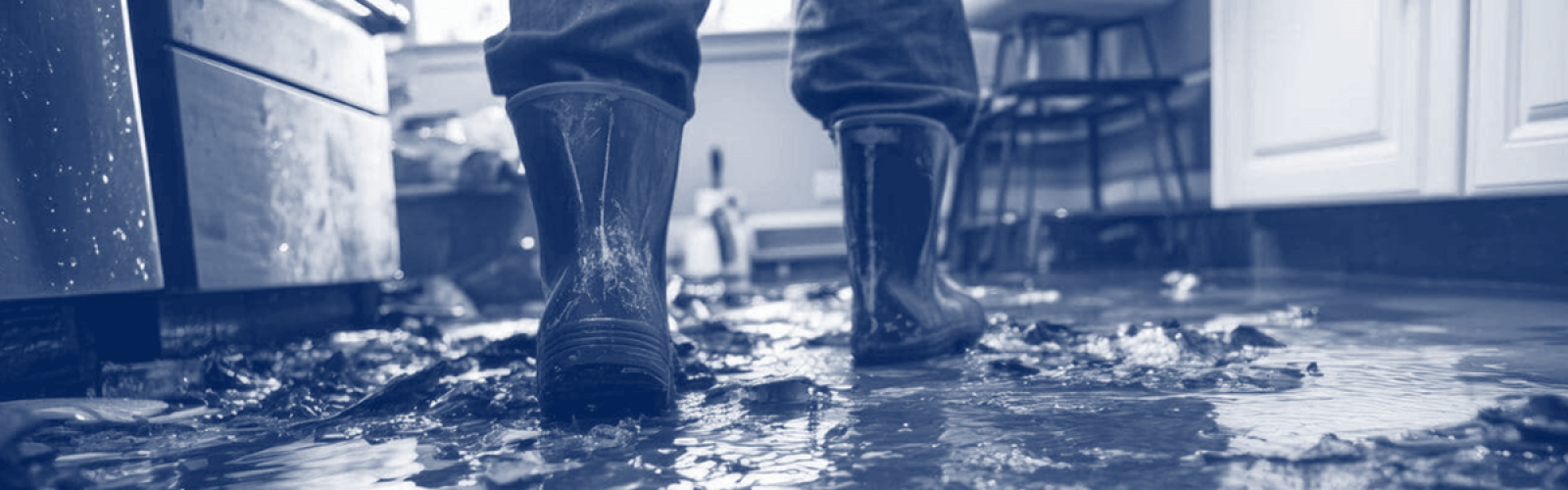
Few things are more alarming than raw sewage backing up into your home. The smell alone tells you something is seriously wrong. But beyond the obvious disgust factor, sewage contamination is a genuine health emergency that requires immediate professional response.
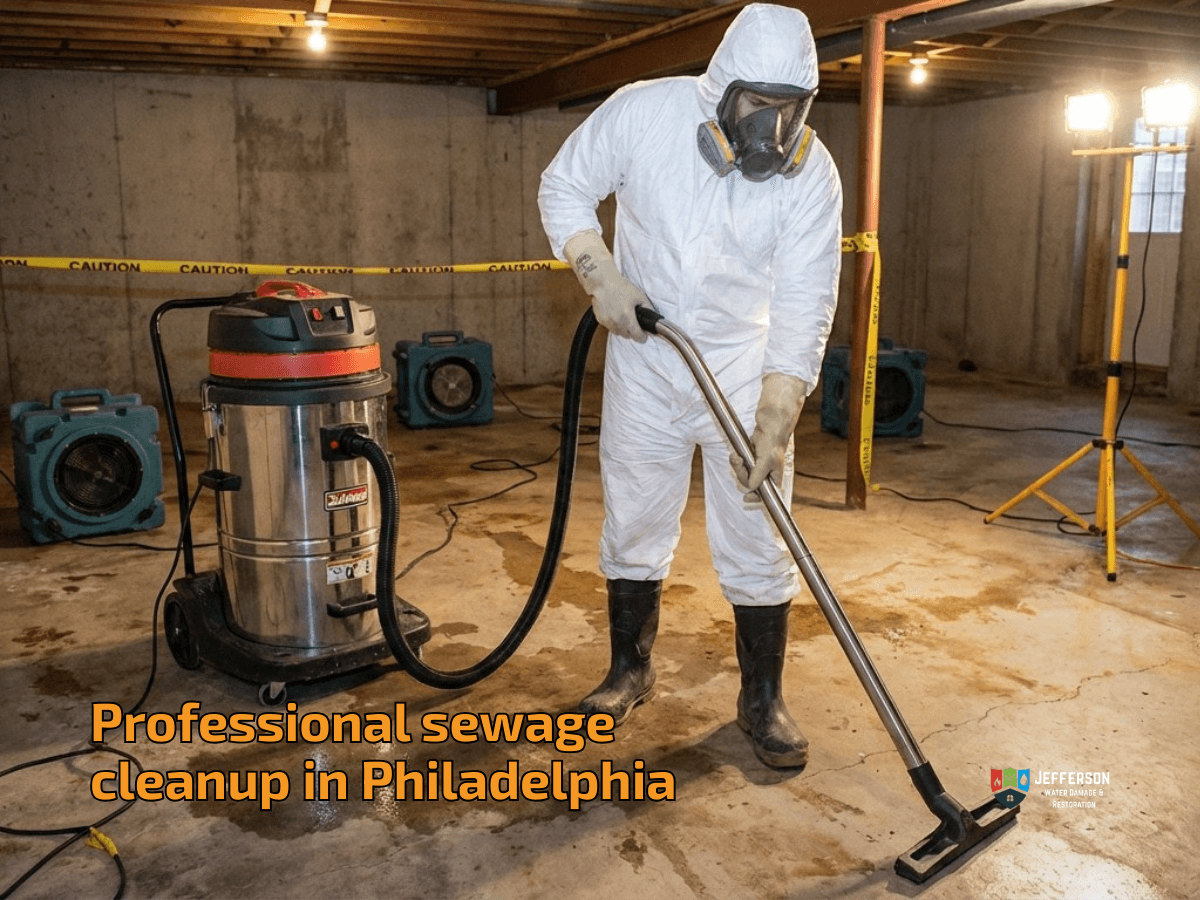
At Jefferson Water Damage & Restoration Philadelphia, we provide 24/7 emergency sewage cleanup throughout the Philadelphia area. Our IICRC certified technicians respond within one hour, extract contaminated water, sanitize and disinfect affected areas, and restore your property to safe, livable condition. We handle everything from the initial emergency response through the final repairs, so you work with one company from start to finish.
Why Sewage Backup Requires Immediate Professional Response
Raw sewage is classified as Category 3 water, also called black water. This is the most dangerous type of water damage because sewage contains bacteria, viruses, parasites, and other pathogens that can cause serious illness. Direct contact with sewage or even breathing contaminated air can lead to gastrointestinal infections, respiratory problems, and other health issues.
The health risks are serious enough on their own, but sewage also creates conditions for rapid mold growth. Within 24 to 48 hours of a sewage backup, mold spores begin colonizing wet materials. Once mold takes hold, you are dealing with a second contamination problem on top of the original sewage damage.
Structural damage progresses quickly as well. Sewage soaks into drywall, insulation, flooring, and subfloor materials. Porous materials that absorb sewage often cannot be saved and must be removed. The longer sewage sits, the more materials become contaminated and the more extensive the demolition and replacement work becomes.
Attempting to clean up sewage yourself is dangerous and usually ineffective. Without proper protective equipment, you risk exposure to pathogens. Without professional extraction and sanitization equipment, you cannot adequately remove contamination or verify that affected areas are safe. This is not a situation for DIY cleanup.
Common Causes of Sewage Backup in Philadelphia
Philadelphia’s infrastructure and housing stock create specific conditions that lead to sewage backups. Understanding these causes helps explain why backups happen and what can be done to prevent them.
Much of Philadelphia uses a combined sewer system where stormwater and sewage share the same pipes: During heavy rainstorms, this system can become overwhelmed. When the volume of water exceeds the system’s capacity, sewage backs up through floor drains, toilets, and other low points in homes. This is one of the most common causes of basement sewage flooding in the city.
Tree roots are another frequent culprit: Older Philadelphia neighborhoods have mature trees with extensive root systems. These roots seek out moisture and can penetrate clay or cast iron sewer pipes through small cracks or joints. Once inside, roots grow and expand, eventually blocking the pipe entirely. Many Philadelphia homes still have original sewer laterals that are 50 to 100 years old, making them particularly vulnerable to root intrusion.
Clogged main sewer lines cause backups when debris, grease buildup, or foreign objects block the flow of wastewater: The blockage causes sewage to reverse direction and come back up through drains. Aging pipes that have corroded, collapsed, or shifted over decades compound the problem.
Sump pump failures during storms leave basements unprotected against water intrusion: When groundwater rises and the pump fails, water enters the basement. If the sewer system is also overwhelmed, that water may be contaminated with sewage.
Our Sewage Cleanup Process
Sewage cleanup requires a systematic approach that addresses contamination, structural drying, and restoration. Here is how we handle sewage emergencies from the first call through project completion.
Step 1, Emergency response and safety
When you call, we dispatch a team immediately. Our average response time is one hour. On arrival, our technicians assess the situation while wearing full personal protective equipment. We identify the source of the backup if it is not already known and work with you to stop ongoing sewage intrusion if possible. We establish containment barriers to prevent contamination from spreading to unaffected areas of your home.
Step 2, Sewage extraction and removal
Standing sewage needs to come out fast. We use truck-mounted extractors and submersible pumps to remove contaminated water as quickly as possible. Along with the sewage itself, we remove materials that cannot be salvaged. Carpet, carpet padding, insulation, and drywall that have absorbed sewage typically must be disposed of because they cannot be adequately sanitized.
Step 3, Sanitization and disinfection
After extraction, every surface that contacted sewage must be thoroughly cleaned and disinfected. We use EPA-registered disinfectants and antimicrobial treatments to eliminate bacteria, viruses, and other pathogens. This is not a simple wipe-down. We clean structural components, subfloors, wall cavities, and any other areas where sewage reached. Proper sanitization is what makes your home safe to occupy again.
Step 4, Structural drying
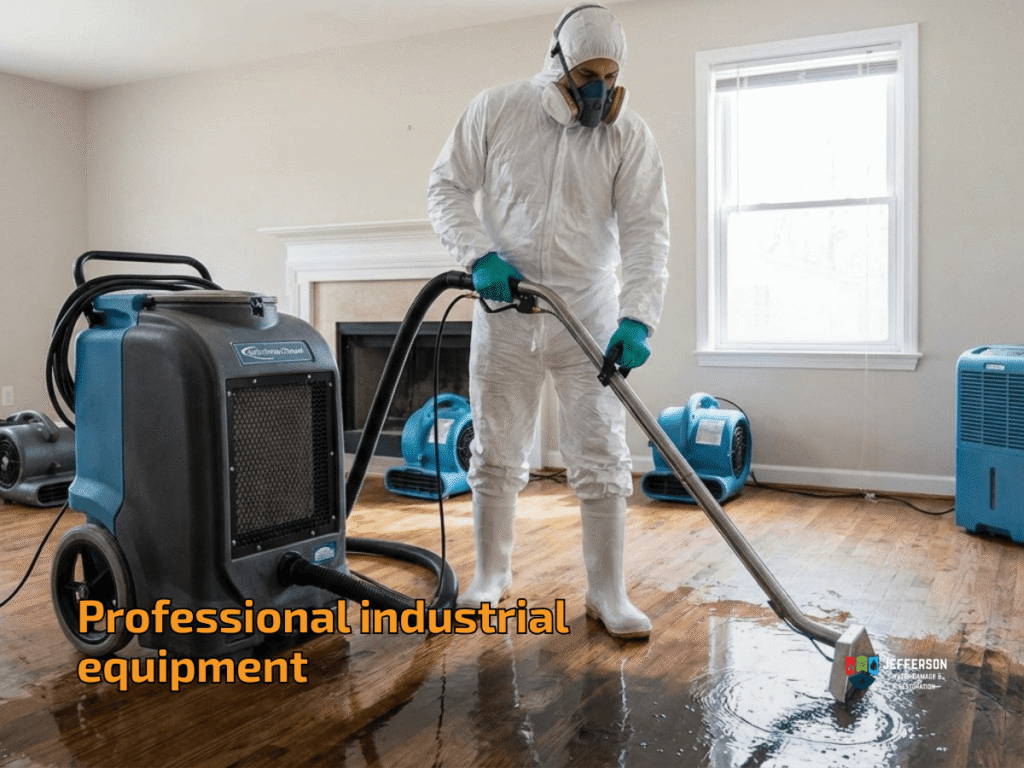
Even after sewage is extracted and surfaces are sanitized, moisture remains in structural materials. We position industrial air movers and commercial dehumidifiers to dry out walls, floors, and other affected components. We monitor moisture levels daily and adjust equipment placement until readings confirm that the structure is thoroughly dry. Complete drying prevents mold growth and ensures a solid foundation for repairs.
Step 5, Odor elimination
Sewage leaves behind persistent odors that standard cleaning cannot remove. We use industrial air scrubbers with HEPA filtration to remove airborne contaminants and odor particles. Depending on the severity of the backup, we may use thermal fogging or hydroxyl generators to neutralize odors that have penetrated porous materials. The goal is complete odor elimination, not just masking.
Step 6, Restoration and reconstruction
This is where Jefferson differs from many sewage cleanup companies. Most restoration companies extract the sewage, dry the space, and leave. You are then responsible for finding a contractor to replace the drywall, flooring, and other materials that were removed. We handle both the cleanup and the reconstruction. New drywall, flooring, painting, trim, and whatever else is needed to return your home to its pre-damage condition. One company, one project, one point of contact.
Basement Sewage Cleanup
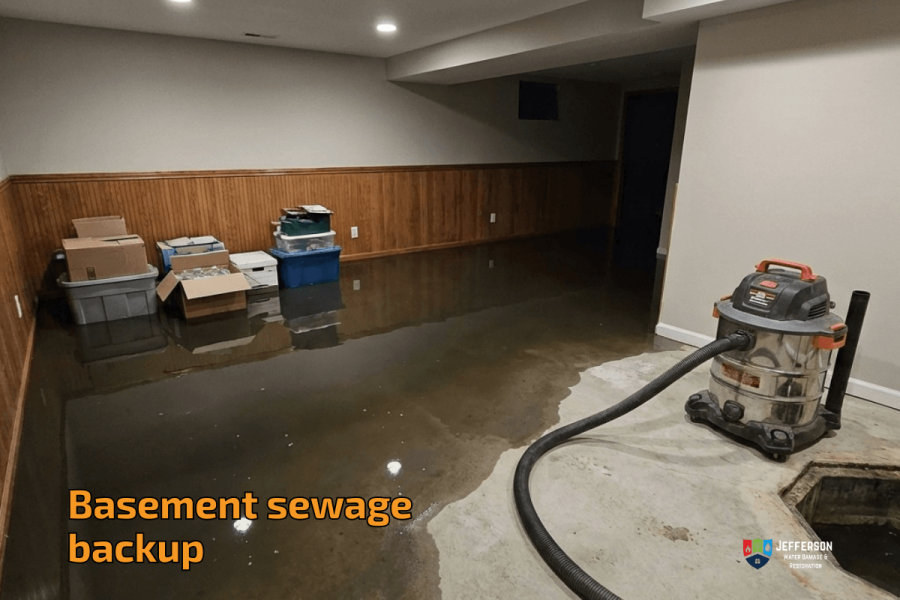
Basements are the most common location for sewage backups because they contain the lowest drains in the home. Floor drains, laundry drains, and basement bathrooms are all entry points when the sewer system backs up. Philadelphia basements are particularly vulnerable because many were built before modern waterproofing techniques existed.
Basement sewage cleanup presents specific challenges. Concrete floors and block walls can absorb contaminated water. Personal belongings, storage items, and mechanical equipment like furnaces and water heaters may be affected. We address all of these concerns, extracting sewage, sanitizing surfaces, drying structural components, and helping you determine what can be saved versus what must be replaced.
After cleanup, we can discuss prevention measures. Backwater valves, sump pump upgrades, and proper drainage improvements can reduce the risk of future backups. If your basement has flooded multiple times, prevention is worth considering as part of the restoration project.
Crawl Space Sewage Cleanup
Crawl space sewage contamination is particularly challenging because of limited access. Our technicians work in tight spaces that homeowners and general contractors often cannot safely navigate. We bring specialized equipment designed for confined areas, including portable extractors and compact air movers.
Contaminated crawl spaces affect the air quality throughout your entire home. Air from the crawl space rises into living areas, carrying odors and potentially harmful particles. Thorough cleanup and sanitization is essential, even though the contamination is out of sight.
After cleaning and drying a crawl space, we often recommend vapor barriers or full encapsulation to prevent future moisture problems. These upgrades protect against both groundwater intrusion and humidity issues that are common in Philadelphia crawl spaces.
What Makes Sewage Cleanup Different From Water Damage
Not all water damage is the same. The restoration industry classifies water damage into three categories based on contamination level. Understanding these categories explains why sewage cleanup requires different protocols than a burst pipe or appliance leak.
Category 1 is clean water from sanitary sources like supply lines or rainwater.
Category 2 is gray water with some contamination, such as washing machine overflows or dishwasher leaks.
Category 3 is black water, which includes sewage, floodwater from rivers, and any standing water that has been present long enough to become grossly contaminated.
Sewage is always Category 3. The cleanup protocols are more extensive, the safety requirements are stricter, and more materials typically need to be removed rather than dried in place. Porous materials that absorb Category 3 water usually cannot be sanitized adequately and must be discarded. Our IICRC certification means we follow industry standards (specifically the S500 standard) for handling Category 3 water damage safely and effectively.
How Much Does Sewage Cleanup Cost in Philadelphia?
Sewage backup cleanup in Philadelphia typically costs $1,000 to $5,000, depending on the extent of the contamination, the size of the affected area, and the materials that need to be removed or sanitized. Small backups confined to a basement floor drain or a single bathroom fall on the lower end. Larger contamination spreading across finished basements, multiple rooms, or absorbent materials like carpet, drywall, and insulation push toward the higher end.
Sewage is classified as Category 3 “black water,” meaning it contains bacteria, viruses, and other contaminants requiring professional handling. The cleanup process involves more than just removing the water. It also includes extracting contaminated materials, disinfecting affected surfaces with EPA-registered antimicrobials, thoroughly drying the structure, and deodorizing the space. These steps ensure that the home is safe to live in again.
Philadelphia’s older sewer infrastructure and combined sewer system make backups more common in heavy rain events, especially in basements across older neighborhoods like Fishtown, Port Richmond, South Philly, and Manayunk. Acting fast matters: the longer contaminated water sits, the more it soaks into porous materials and the higher the final cost.
Jefferson Restoration is available 24/7 for emergency sewage cleanup across the Greater Philadelphia area. We coordinate directly with your insurance provider and provide detailed, itemized estimates before any work begins.
Insurance Coverage for Sewage Backup
Insurance coverage for sewage backup is often misunderstood, and the confusion can lead to denied claims. Standard homeowners insurance policies typically exclude damage caused by sewer or drain backup. However, many insurers offer a sewer backup endorsement or rider that you can add to your policy for additional coverage.
Terminology matters when filing a claim. There is an important distinction between a sewer backup (sewage coming up from the municipal system) and an overflow (water backing up because of a clog within your home’s plumbing). Overflows from clogged toilets or drains are often covered under standard policies, while sewer backups typically require the additional endorsement. Using the wrong terminology when reporting a claim can trigger a denial.
We document sewage damage thoroughly with photos, moisture readings, and detailed descriptions of affected areas. This documentation supports your insurance claim and helps ensure you receive appropriate coverage. We communicate directly with adjusters and provide whatever additional information they request. While we cannot guarantee coverage (that is between you and your insurer), we know how to document damage properly and advocate for our clients.
How Jefferson Restoration Works?
01
Immediate Response
24/7 emergency dispatch
02
Free Assessment
Transparent inspection and estimate
03
Insurance Coordination
We work directly with your provider
04
Restoration & Repair
From damage control to complete rebuild
Restoration Made Simple
Why Choose Jefferson for Sewage Damage Cleanup
Most sewage cleanup companies in Philadelphia do the same thing. They show up, extract the contaminated water, run some fans and dehumidifiers, and leave. You are then left with a dried out space that still needs new drywall, flooring, and paint. You have to find another contractor, get another estimate, and start another project.
We do things differently. Jefferson handles the entire job from emergency response through final restoration. When we leave, your home is not just dry and sanitized. It is finished. New drywall hung and painted. New flooring installed. Trim replaced. Ready to live in again. One company, one project, one bill.
Our team is IICRC certified with specific training in water damage restoration and biohazard cleanup. We follow S500 industry standards for Category 3 water damage, which means we use the proper protocols, equipment, and safety measures that sewage contamination requires. This is not general handyman work. It requires specialized knowledge and equipment.
We have been working in Philadelphia homes since 2016. We understand the challenges that come with the city’s aging infrastructure, combined sewer systems, and older housing stock. When your basement floods because a storm overwhelmed the sewer system, we have seen it before and we know exactly how to handle it.
Because we also provide mold remediation services, we can address mold issues that develop from sewage damage without bringing in another company. If we find mold during our assessment or if mold develops during the drying process, our team handles it as part of the same project. No delays, no finger pointing between contractors.
When you call at 2 AM because sewage is backing up into your basement, we answer. Our average response time is one hour. Sewage emergencies do not wait for business hours, and neither do we.
Sewage Cleanup Throughout Philadelphia
Jefferson provides emergency sewage cleanup throughout Greater Philadelphia. We respond to emergencies in Center City, North Philadelphia, South Philadelphia, West Philadelphia, and Northeast Philadelphia.
Older neighborhoods with combined sewer systems and aging infrastructure see more frequent backups, and we are familiar with the specific challenges these areas present.
We also serve surrounding communities including Kensington, Fishtown, Port Richmond, Germantown, Manayunk, Roxborough, and University City, Upper Darby, Darby, Yeadon, Lansdowne, Drexel Hill, Havertown, Media, Chester, Cheltenham, Jenkintown, Abington, Norristown, Conshohocken, Bala Cynwyd, Ardmore.
Frequently Asked Questions About Sewage Cleanup
How fast should I call after a sewage backup?
Immediately. Sewage is a health hazard, and the damage gets worse with every hour. Mold can begin growing within 24 to 48 hours. The faster you call, the more materials we can potentially save and the lower the overall restoration cost.
Is sewage cleanup covered by insurance?
It depends on your policy. Standard homeowners insurance typically excludes sewer backup, but many policies offer additional coverage through a sewer backup endorsement. Check your policy or call your insurance agent to confirm your coverage. We help document damage to support your claim regardless of coverage type.
Can I clean up sewage myself?
We strongly advise against it. Raw sewage contains dangerous pathogens that require proper protective equipment to handle safely. Without professional extraction and sanitization equipment, you cannot adequately remove contamination or verify that your home is safe. The health risks of DIY sewage cleanup are significant.
How long does sewage cleanup take?
The timeline depends on the extent of damage. A small backup affecting a single room might be cleaned, dried, and restored within a week. Larger projects involving basements or crawl spaces typically take one to two weeks for cleanup and drying, plus additional time for reconstruction. We give you realistic timeline estimates based on your specific situation.
Will sewage backup cause mold?
Mold growth is likely if sewage damage is not addressed quickly and properly. The combination of moisture and organic material creates ideal conditions for mold. Professional cleanup includes thorough drying and antimicrobial treatments to prevent mold growth. If we discover mold during our assessment, our mold remediation team handles it as part of the same project.
What should I do immediately after a sewage backup?
First, avoid contact with the sewage and keep family members and pets away from the affected area. Turn off electrical power to the affected area if you can do so safely. Stop using water in your home (no flushing toilets, running washing machines, or using sinks) until the backup is resolved. Then call a professional sewage cleanup company immediately.
Do you handle the repairs after cleanup?
Yes. Unlike many restoration companies that only handle extraction and drying, we complete the full restoration. Drywall replacement, flooring installation, painting, and any other repairs needed to return your home to its pre-damage condition. You work with one company from emergency response through final walkthrough.
Contact Jefferson for
Emergency Sewage Cleanup
Get a Free Professional Inspection
Local experts • Fast response • No hidden fees