
Emergency Basement Flood Cleanup in Philadelphia, PA, 24/7 Response
We perform extraction and drying work for flooded basements, as well as structural drying, for homes and businesses throughout Philadelphia.. Call us now at (267) 641-0090 and we will be there.
- 60 min response
- IICRC Certified #70209237
- We Handle Insurance
Request a Free Inspection
Local experts • Fast response • No hidden fees
A flooded basement in Philadelphia needs professional attention right now. Every hour that passes allows water to soak deeper into walls, floors, and framing. Jefferson Water Damage & Restoration Philadelphia responds in 60 minutes or less, 24 hours a day, extracts standing water fast, and dries your basement completely to stop mold before it starts.
Call us now at (267) 641-0090.
Why Philadelphia Basements Flood, and Why Fast Cleanup Matters
Philadelphia faces flooding from the Delaware and Schuylkill rivers, tidal influences, and urban stormwater. The city’s aging combined sewer system contributes heavily to basement flooding during heavy rain events. That system was built when Philadelphia had far fewer residents. During intense storms, it simply gets overwhelmed, and sewage backs up into homes through floor drains, toilets, and tubs.
Philadelphia’s infrastructure adds another layer of risk that most homeowners don’t know about. In the late 1800s, the city diverted roughly 73% of its surface streams into underground pipes.
The Wingohocking Creek, now buried beneath Germantown, still flows underground and contributes directly to basement flooding in Germantown, Kensington, Northern Liberties, and Port Richmond. When it rains hard, water backs up through that buried system with nowhere to go.
FEMA rates Philadelphia County at “Very High” for inland flood risk, with an estimated annual flood loss of $266.1 million. Properties here have filed 1,695 National Flood Insurance Program claims totaling $47.5 million in payouts since 1978.
Low-lying neighborhoods including South Philadelphia, Port Richmond, Kensington, and Center City see the highest frequency of sewer backup flooding.
The mold clock starts the moment water enters your basement. The EPA and CDC confirm mold can begin growing on surfaces within 24 to 48 hours. After three to twelve days, visible colonies spread across walls, ceilings, and wood framing.
Acting within the first few hours makes an enormous difference in both the scope of damage and the cost to fix it. If a burst pipe has caused flooding in your basement, our burst pipe repair service in Philadelphia can address the source before more flooding occurs.
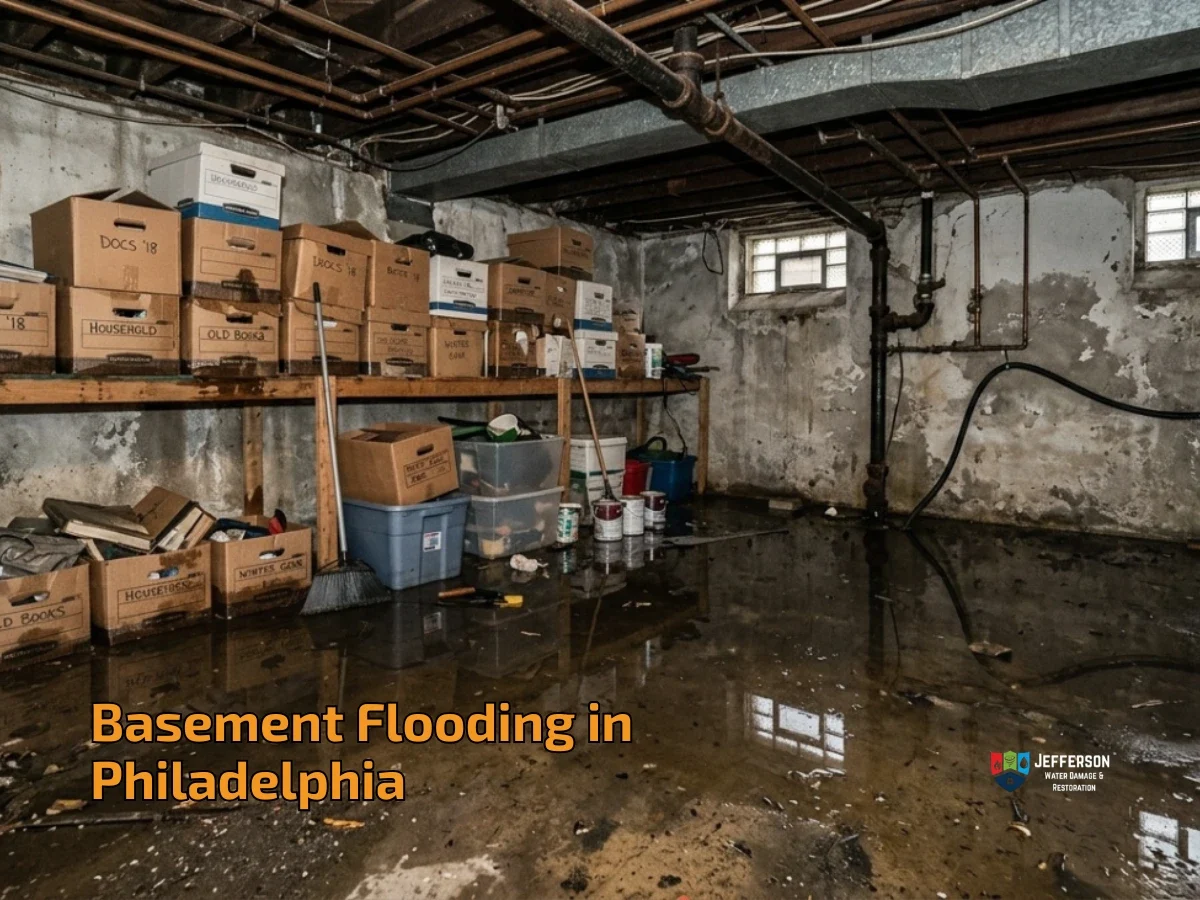
Our Basement Flood Cleanup Process, Step by Step
When you call Jefferson, we dispatch a technician immediately from our location at 443 W Girard Ave in Northern Liberties. Here is exactly what happens from the moment we arrive.
Emergency dispatch and safety assessment
Our first priority on arrival is electrical safety. A flooded basement with water near outlets or the electrical panel is a serious hazard. We assess the situation, identify the water source, and stop ongoing water intrusion where possible. If the circuit breaker is located outside the basement, shut off power before entering and call us immediately.
Water extraction
We deploy truck-mounted extractors and submersible pumps to remove standing water fast. The sooner water comes out, the less it spreads into walls, insulation, and concrete. For basements with several inches of standing water, rapid extraction is the most important step we take.
Moisture mapping and inspection
Standing water removal is only part of the job. We use thermal imaging cameras and moisture meters to locate water hidden behind walls, beneath flooring, and inside block foundations. Without this step, moisture left behind continues causing damage and feeds mold growth long after the visible water is gone. If you suspect a hidden source driving the problem, our leak detection service in Philadelphia can identify the issue before it causes another flood.
Structural drying
We position industrial air movers and commercial dehumidifiers throughout the basement to drive moisture out of materials and capture it from the air.
We monitor moisture readings daily and adjust equipment placement until every reading returns to a normal range.
Sanitization and mold prevention treatment
We apply EPA-registered antimicrobial treatments to all affected surfaces. Basement flooding often involves sewage, bacteria, and hazardous contaminants. The EPA advises against attempting to remove these yourself. Our technicians follow full protective protocols and ensure contamination is contained and eliminated without spreading through the rest of your home.
Content handling and debris removal
We remove water-saturated carpet, padding, insulation, and drywall that cannot be salvaged. Salvageable belongings are documented and handled carefully. Nothing gets thrown out without your knowledge, and everything removed is recorded for your insurance claim.
Documentation for insurance
Throughout the job, we photograph damage, log moisture readings at each location, and produce a detailed written scope of work. This documentation is what insurance adjusters need to process your claim. We communicate directly with your carrier so you don’t have to manage that on your own.
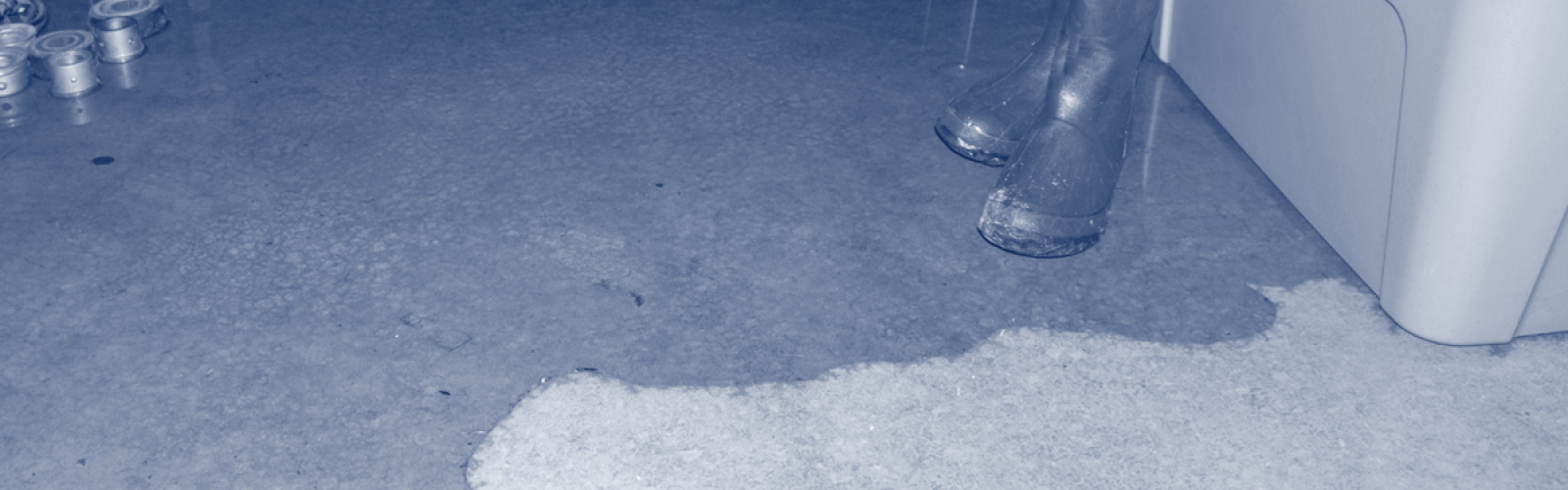
Common Causes of Basement Flooding in Philadelphia Homes
Philadelphia’s housing stock and city infrastructure create specific failure points. Knowing what causes basement flooding helps you recognize warning signs and move quickly when something goes wrong.
Sump pump failure is one of the most frequent causes we respond to. During heavy storms, sump pumps run continuously. When they fail under load, water fills the pit and spills across the basement floor within minutes.
Sewer backups hit hardest in low-lying neighborhoods including Germantown, Kensington, Northern Liberties, South Philadelphia, and Port Richmond. When Philadelphia’s combined sewer system gets overwhelmed during storms, sewage comes back through floor drains and toilets. Aging sewer laterals with tree root intrusion cause backups year-round, independent of weather.
Foundation cracks are common in Philadelphia’s older masonry row homes. Water enters through cracks in block or brick foundations, window wells, and structural openings, especially during ground saturation after prolonged rain. Many homeowners don’t discover these entry points until a heavy storm reveals them.
Water main breaks cause sudden flooding that can affect entire blocks.
A 30-inch main break at South 6th and Bainbridge streets in Queen Village flooded the surrounding neighborhood. Philadelphia has hundreds of water mains over 100 years old. When they fail, water moves fast and enters basements through the ground before anyone has time to react.
Improper yard grading sends water directly toward your foundation during storms or snowmelt. A yard that slopes toward the house rather than away from it channels runoff into window wells and against foundation walls. This is a fixable problem, but it causes repeated flooding until it is addressed.
For businesses facing basement flooding, our commercial water damage restoration service in Philadelphia covers the full scope of commercial cleanup and recovery.
Basement Flood Cleanup Costs in Philadelphia, What to Expect
Most homeowners in Philadelphia pay between $2,000 and $7,000 for basement flood cleanup, with an average of around $4,000. That range reflects a wide variety of situations, so understanding the variables helps you plan ahead.
The type of water involved is the single biggest cost driver. A one-inch intrusion of clean water from a supply line typically costs between $500 and $1,500 to repair. Moderate gray water flooding — from sources such as washing machine overflow or sump pump failure — generally costs between $3,000 and $6,000. In Philadelphia, sewage backup cleanup generally costs between $1,000 and $5,000, depending on the size of the affected area and the severity of the contamination. Industry baseline rates are $3 to $7 per square foot, with the total cost determined by water category and basement size.
Structural damage adds cost on top of the cleanup itself. When water soaks into drywall, wood framing, or insulation, those materials often need full replacement. Reconstruction after a significant flood can add several thousand dollars to the project total, depending on scope.
Philadelphia’s combined sewer system increases the likelihood of basement flooding in older neighborhoods such as Fishtown, Port Richmond, South Philadelphia, and Manayunk, particularly during periods of heavy rainfall. Acting quickly keeps costs at the lower end of the range. Calling within the first 24 to 48 hours can prevent the need for extended mold remediation, additional days of structural drying, and expanded material replacement, all of which can be costly.
Most standard homeowner insurance policies cover sudden and unexpected water damage from plumbing failures like burst pipes. Flood damage from heavy rainfall or storm runoff typically requires separate flood insurance. Sewer backup coverage usually requires a specific rider. Jefferson helps you document everything from the first hour on-site, coordinates directly with your insurance carrier, and provides the paperwork adjusters need to process claims accurately.
Call us at (267) 641-0090 for a free on-site estimate with a written scope before any work begins — no surprises, no inflated quotes.
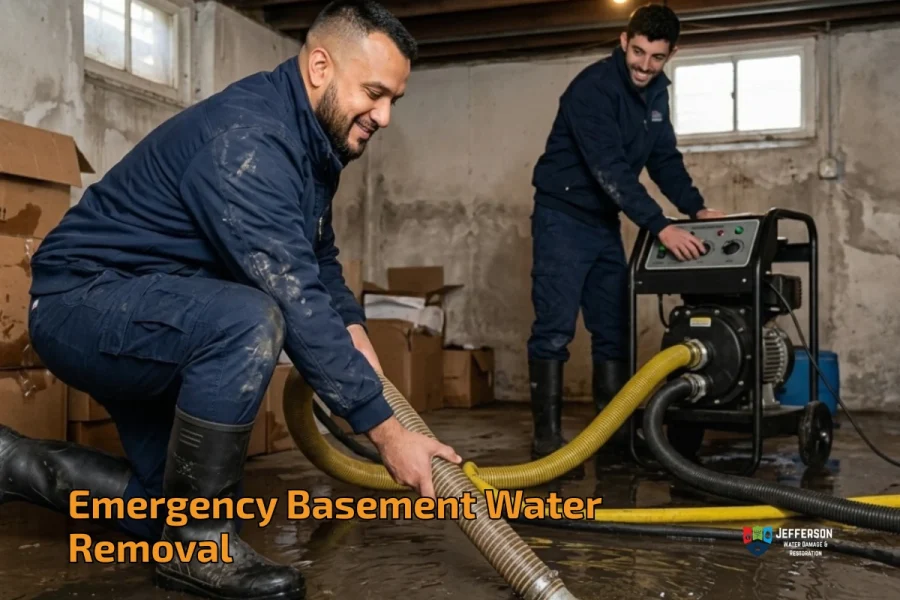
What to Do Right Now If Your Philadelphia Basement Is Flooded
While you wait for our crew to arrive, a few immediate steps protect your safety and limit further damage.
Do not enter the basement if water has reached electrical outlets or if you are unsure whether the power is off. Shut off the circuit breaker from a panel located outside the flood zone, and wear rubber boots and gloves before going in. Do not use any electrical appliance that has been in contact with floodwater.
If you can safely reach the main water shut-off and a plumbing failure is the source, close it now. Stopping the source before we arrive reduces the total volume of water we extract and shortens the drying timeline.
Take photos and videos of everything before touching or moving anything. Capture the water level, the affected walls and flooring, and any visible damage to belongings. This documentation is important for your insurance claim, and the earlier you capture it, the stronger your record will be.
Do not apply bleach or household cleaners to sewage-contaminated water. The EPA advises against DIY decontamination for black water situations. Spreading contaminated water without proper containment protocols creates health hazards that compound the original damage.
Call Jefferson immediately at (267) 641-0090. If the area is not fully dried within 48 hours, mold growth becomes likely. We move fast specifically to prevent that outcome.
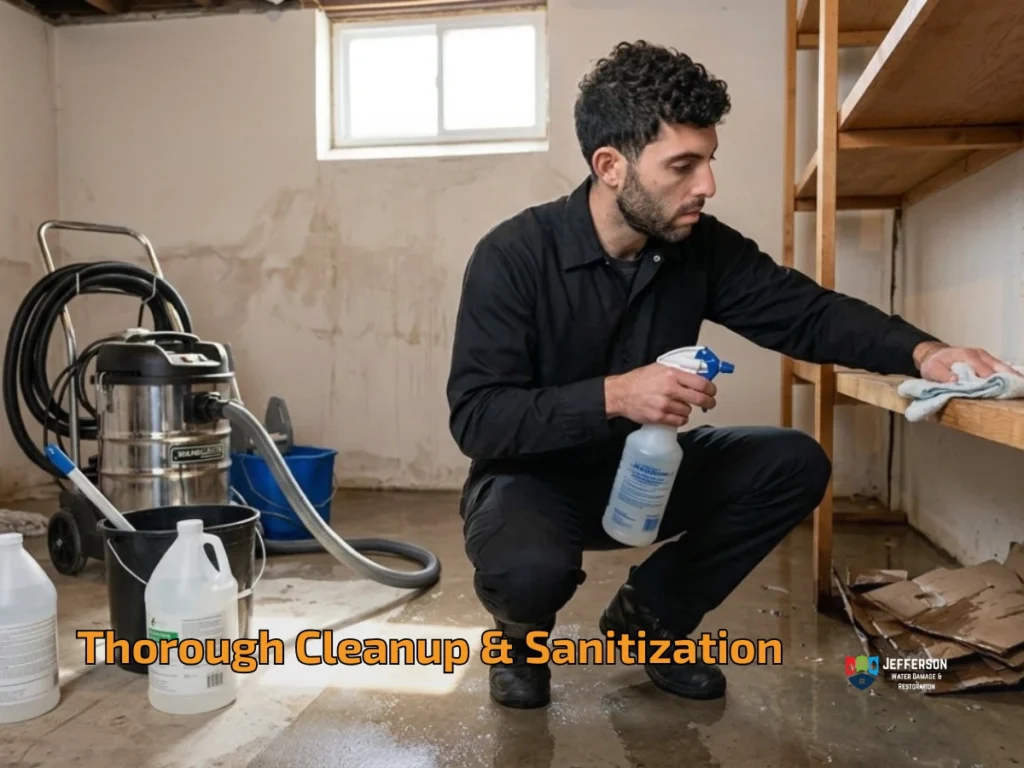
How Jefferson Restoration Works?
01
Immediate Response
24/7 emergency dispatch
02
Free Assessment
Transparent inspection and estimate
03
Insurance Coordination
We work directly with your provider
04
Restoration & Repair
From damage control to complete rebuild
Why Philadelphia Homeowners Call Jefferson
Jefferson is based at 443 W Girard Ave in Northern Liberties, one of Philadelphia’s flood-watch neighborhoods. We are not a national franchise dispatching crews from the suburbs. Our technicians know these streets, these row homes, and these sewer systems because they work in them every week.
Our IICRC certification (No. 70209237) reflects formal training in water damage restoration, moisture science, and contaminated water protocols. We follow IICRC S500 standards for water damage and handle Category 1 clean water, Category 2 gray water, and Category 3 black water situations with the appropriate equipment and safety measures for each.
We handle the full job from emergency extraction through final reconstruction. Drywall, flooring, paint, trim, when we leave, your basement is finished and ready to use again. You work with one company and one point of contact through the entire process. Because we also provide mold remediation, if mold appears during the drying phase, we address it as part of the same project without delays or hand-offs to another contractor.
We also recommend that Philadelphia homeowners look into the Philadelphia Water Department’s Basement Backup Protection Program, which provides rebates toward the installation of backwater valves that prevent sewer backups from entering your home. It does not cover cleanup costs after a flood, but it is a meaningful preventive resource worth knowing about.
Basement Flood Cleanup Across Philadelphia, Neighborhoods We Serve
Jefferson responds to basement flooding throughout Philadelphia and the surrounding area.
We serve Northern Liberties (19123), Fishtown (19125), Kensington and South Kensington (19122), Germantown (19144), Port Richmond (19134), Brewerytown and Strawberry Mansion (19121), Fairmount and Spring Garden (19130).
South Philadelphia included Queen Village, Bella Vista, Passyunk Square, and Graduate Hospital (19145, 19146, 19147, 19148).
West Philadelphia including Cobbs Creek, University City, and Mantua (19104, 19139, 19143, 19151)
Northeast Philadelphia including Oxford Circle, Mayfair, Tacony, Frankford, Holmesburg, and Torresdale (19114, 19115, 19116, 19120, 19124, 19135, 19136, 19137), Roxborough and Manayunk (19128), Chestnut Hill and Mt. Airy (19118, 19119), Olney and Logan (19120, 19141).
Center City including Old City, Society Hill, and Rittenhouse Square (19102, 19103, 19106, 19107).
We also serve surrounding communities including Upper Darby, Drexel Hill, Norristown, Conshohocken, Cheltenham, Jenkintown, Abington, and Darby. If you are dealing with a flooded basement in the Philadelphia region, call us at (267) 641-0090 and we will confirm coverage and dispatch immediately.
Frequently Asked Questions About Basement Flood Cleanup in Philadelphia
How quickly can Jefferson respond to a flooded basement in Philadelphia?
Jefferson operates 24 hours a day, every day of the year. We dispatch technicians from our Philadelphia location at 443 W Girard Ave and aim to arrive within 60 minutes of your call. Mold can begin growing within 48 hours, so speed of response directly affects the scope and cost of the restoration.
Does homeowners insurance cover basement flood cleanup?
Standard homeowner policies generally cover sudden water damage from plumbing failures. Flooding from heavy rainfall typically requires separate flood insurance. Sewer backup coverage usually needs its own rider. Jefferson documents all damage from arrival, communicates directly with your adjuster, and bills carriers directly where coverage applies. If the flooding started with a broken pipe, our burst pipe repair service in Philadelphia explains what most policies cover for pipe-related damage.
How long does it take for mold to grow after a basement flood?
The EPA and CDC confirm mold can start growing within 24 to 48 hours of water exposure. Philadelphia basements are particularly susceptible because older construction materials like concrete block, wood joists, and pre-drywall plaster absorb moisture quickly. Visible colonies typically appear within three to twelve days if a basement is not dried professionally. Same-day response prevents mold from establishing, which is far less expensive than mold remediation after the fact.
What are the most common causes of basement flooding in Philadelphia row homes?
The most frequent causes are sewer backups from Philadelphia’s aging combined sewer system, sump pump failure during storms, foundation cracks in older masonry construction, water main breaks
Stop
Flooded Basement Now
Get a Free Professional Inspection
Local experts • Fast response • No hidden fees