
Storm Damage Restoration in Philadelphia, PA
24/7 Emergency Response across Philadelphia. Call us now at (267) 641-0090 and we will be there.
- 60 min response
- IICRC Certified #70209237
- We Handle Insurance
Request a Free Inspection
Local experts • Fast response • No hidden fees
A storm can tear through a Philadelphia neighborhood in minutes and leave behind damage that grows worse by the hour. If your home or business has been hit by wind, flooding, hail, or a fallen tree, Jefferson Water Damage & Restoration Philadelphia responds 24 hours a day from our base at 443 W Girard Ave in Northern Liberties.
We dispatch certified technicians across every Philadelphia neighborhood, from Fishtown to Eastwick, and arrive ready to secure your property, document the damage, and start the restoration process immediately. Call +1 267 641-0090 now for a free damage assessment.
Philadelphia's Storm Damage Experts, On-Site in Hours, Not Days
Storm damage compounds fast. Water that enters through a broken roof or blown-out window reaches drywall, insulation, and framing within minutes. Mold becomes a risk within 24 to 48 hours of water infiltration. The faster a restoration team arrives, the more of your property can be saved, and the lower the total cost of repair.
Jefferson is locally owned and based inside the city, not dispatched from a suburban franchise office. Our IICRC-certified technicians are licensed, insured, and available every day of the year, nights, weekends, and holidays. When you call, you speak with a real person who knows Philadelphia homes, not a call center routing your job across three time zones.
We handle the full scope from emergency stabilization through final reconstruction. One team, one project, one clear estimate before work begins. No subcontractors handed off mid-job, no surprise charges at the end.
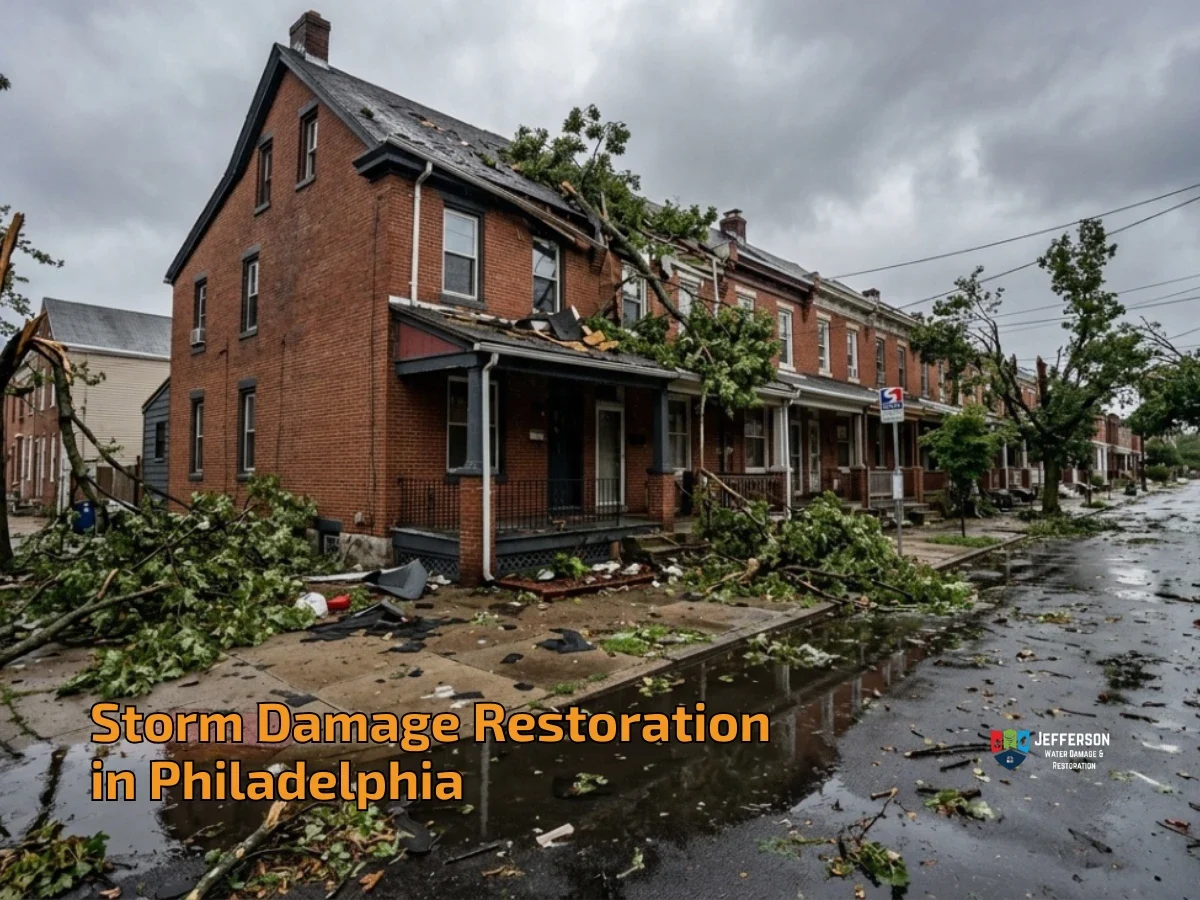
Storm Damage We Restore in Philadelphia, Every Type, Every Season
Philadelphia storms vary by season and by source. The restoration approach changes depending on what hit your property and how badly. Jefferson handles every category of storm damage common to the city’s housing stock and climate.
Wind and High-Wind Damage
Strong Philadelphia storms frequently push wind speeds to 60-70 mph. That force strips roofing material, rips off siding panels, breaks windows, and drives debris into walls and structures. When a roof deck is exposed, even a light rain that follows can saturate insulation, drywall, and floor assemblies below. Jefferson secures the breach first with tarping and board-up, then assesses the full structural damage before repairs begin.
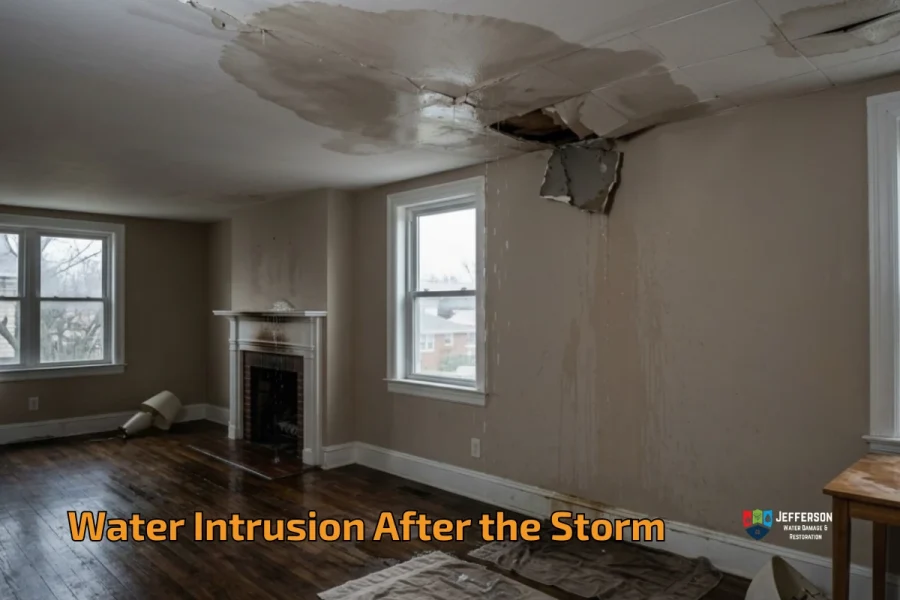
Storm Flooding and Water Intrusion
Heavy rainfall overwhelms Philadelphia’s aging drainage infrastructure quickly, pushing water into basements, crawl spaces, and ground-floor units across neighborhoods like Kensington, Grays Ferry, Port Richmond, and Eastwick. Water that enters from a storm event is typically clean at first contact but picks up contaminants rapidly as it travels through soil, drains, and floor materials.
Our water extraction service removes standing water immediately, and our basement flood cleanup team handles the full scope of post-storm flooding in below-grade spaces.
Hail Damage
Hail causes damage that often goes unnoticed until a leak appears weeks later. Impact from hailstones compromises roof membranes, dents metal flashing, cracks skylights, and punctures flat-roof coatings, a particular concern for Philadelphia’s many rowhouses with built-up or TPO flat roof systems. HVAC equipment on rooftops and window AC units are also common hail casualties. Jefferson documents all hail impact thoroughly, which matters when filing with your insurance carrier.
Winter Storm and Ice Damage
Philadelphia nor’easters and freeze-thaw cycles cause serious structural damage that many restoration companies underserve. Ice dams form when heat escapes through an attic and melts snow near the ridge, which then refreezes at the colder eaves and forces water under shingles and into the home. Heavy snow loads stress flat roofs, parapets, and older masonry structures across North and West Philly. Freezing temperatures split pipes in exterior walls and unheated spaces.
For properties where a burst pipe is the source of the damage, our burst pipe repair service addresses both the plumbing failure and the resulting water damage in a single coordinated response.
Fallen Tree and Debris Impact
Mature trees along corridors like Germantown Avenue, Wissahickon Avenue, and throughout Fairmount Park become projectiles in high winds. A tree falling on a roof creates an immediate structural breach and exposes the interior to rain. Jefferson handles debris removal, emergency tarping, structural assessment, and full reconstruction, so you do not have to coordinate a roofer, a general contractor, and a restoration company separately.
Power Outage-Driven Sump Pump Failure
Severe storms in the Philadelphia area regularly knock out power to tens of thousands of properties. When a sump pump loses power during a heavy rain event, a dry basement floods within hours. This scenario is extremely common in rowhouses across Northeast Philadelphia, Bridesburg, and Manayunk, and most competitors never specifically address it. Jefferson responds to storm-triggered basement flooding regardless of the source.
Our cleanup team handles water removal, structural drying, and damage documentation whether the cause was a sump failure, drain backup, or direct water intrusion.
One important note: when storms push water near electrical panels, outlets, or wiring, the risk of shock, short circuit, or fire is real. Do not enter a flooded space until a professional confirms it is safe to do so.
Our Storm Damage Restoration Process, From Emergency Call to Full Rebuild
Storm damage restoration in Philadelphia often requires multiple coordinated steps. Jefferson manages every phase in-house, which means no delays between handoffs and one point of contact throughout the project.
The process begins with emergency dispatch. We operate 24/7 and reach most Philadelphia neighborhoods within 1-2 hours of your call. When our technicians arrive, the first priority is your safety, assessing structural stability, identifying electrical hazards, and securing the site before restoration begins.
Next, we conduct a thorough damage assessment and documentation. Every affected surface is photographed and documented with moisture readings and written reports formatted specifically for insurance adjuster review. This step protects your claim from the start.
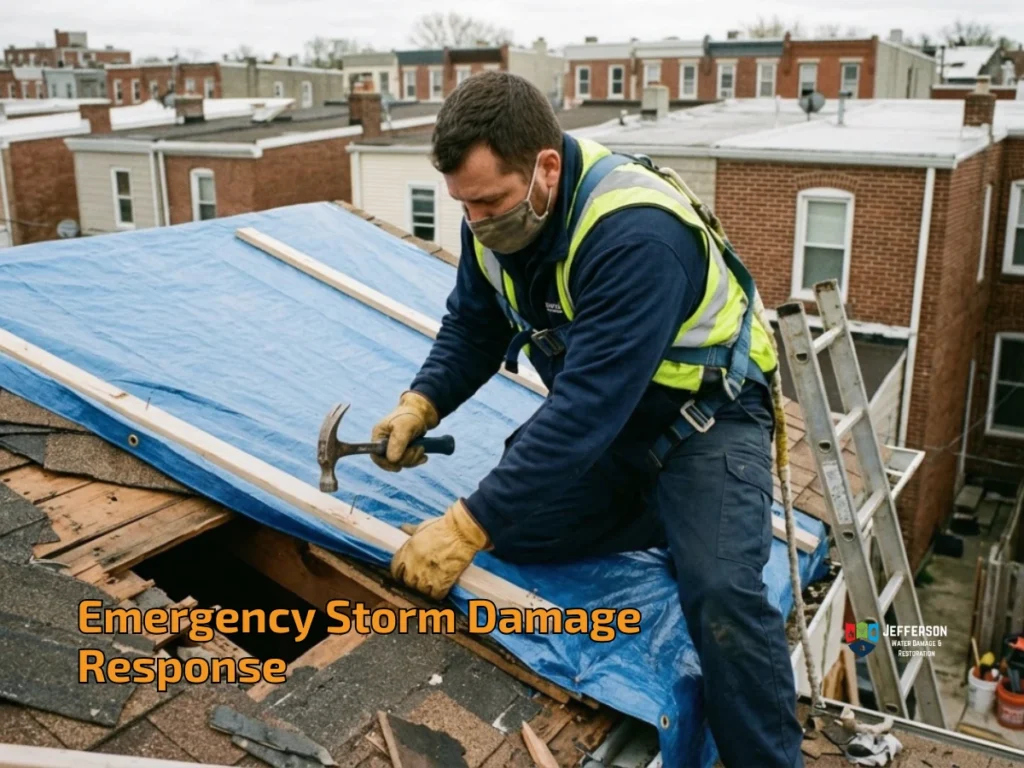
If storm damage has opened your roof, walls, or windows, we stabilize the structure immediately with tarping and board-up services. Protecting your property from further weather exposure stops damage from spreading while repairs are planned.
Water extraction and structural drying follow. Using truck-mounted extractors, industrial air movers, and LGR dehumidifiers, we remove standing water and begin drying the structure. Our water extraction service handles volumes of water that household equipment cannot manage. Moisture mapping and thermal imaging confirm when materials reach acceptable dryness levels, not just when they feel dry to the touch.
Mold prevention is built into every storm restoration job. Because mold growth begins within 24 to 48 hours of water infiltration, we apply antimicrobial treatments during the drying phase. If mold is already present or develops during the process, our certified remediation team addresses it directly through our mold remediation service.
For properties where mold growth is suspected but not yet visible, a professional mold inspection identifies the extent of the problem before it spreads further.
The final phase is full structural restoration. Jefferson rebuilds to pre-loss condition, drywall, flooring, trim, paint, and any structural framing that was compromised.
When you leave the project, your property is finished and livable again.
Storm Damage Restoration Costs in Philadelphia, What to Expect
The national average cost of storm damage repairs is about $12,000. Wind damage restoration typically costs homeowners between $2,600 and $22,000. Severe cases from major storm events can cost more depending on the extent of the damage. Professional storm restoration specialists charge these amounts because roofing and water damage repairs require safety measures and technical expertise, making them more expensive.
Acting quickly consistently reduces the total cost. If mold remediation becomes necessary, it adds between $500 and $6,000 to a project. This occurs when water sits untreated for more than 24 to 48 hours.
Jefferson provides a free, no-obligation damage assessment so you know exactly what your property needs before any work begins. No pressure, no guesswork, just a clear estimate based on what we actually find.
Navigating Your Insurance Claim After a Philadelphia Storm
Most standard Pennsylvania homeowner’s insurance policies cover wind, hail, and lightning damage. Flooding caused by rising water from an external source, such as the Schuylkill or Delaware River overflowing, typically requires a separate flood insurance policy through NFIP or a private carrier. If you are unsure which type of event damaged your property, our assessment documentation helps clarify the cause for your adjuster.
Jefferson documents everything from the moment we arrive: timestamped photos, moisture meter readings, thermal imaging data, written damage descriptions, and itemized records of all work performed. This documentation package meets the standards that insurance adjusters need to process claims efficiently.
Practical steps that protect your claim: do not discard any damaged materials before the adjuster’s visit, photograph all damage yourself before anything is moved, keep all receipts for emergency expenses, and file promptly since most policies have claim deadlines. We recommend calling Jefferson before you call your insurer so the documentation is complete and accurate when the adjuster makes contact.
Jefferson works with all major insurance carriers operating in Pennsylvania. We know what adjusters look for and we make sure your documented scope of damage is accurate and complete.
Truck mounted water extractors connect to powerful vacuum systems in our service vehicles, removing water far faster than portable units. For large flooding events, this speed makes a real difference in limiting damage.
Industrial air movers and commercial dehumidifiers work together to dry structures quickly. A typical residential water damage job might require 10 to 20 air moversand multiple dehumidifiers running continuously for several days.
HEPA air scrubbers filter mold spores, dust, and other particles from the air during the restoration process, protecting both our technicians and your family.
Why Philadelphia Homeowners Trust Jefferson Water Damage and Restoration
We are based at 443 W Girard Ave in zip 19123, inside the city, a few blocks from Northern Liberties and the Brewerytown corridor. When a storm hits Fishtown, Germantown, or Southwest Philly, our crews are not driving in from the suburbs. That proximity is a real advantage when every hour matters.
Our technicians are IICRC-certified with specific training in storm response, water damage restoration, and structural drying. We follow established industry standards for moisture measurement and material drying, which means your property is documented and restored correctly, not just quickly.
Storm damage often triggers secondary problems that require separate expertise. A lightning strike can cause fire damage that needs its own remediation process, our fire damage restoration service handles those situations.
Combined sewer overflow during heavy storms brings sewage into basements across Philadelphia, our sewage cleanup team responds to those emergencies with Category 3 protocols and proper biohazard handling. Moisture that collects under a home during storm flooding requires professional attention from our crawl space cleanup service. For business owners, our commercial water damage restoration team works around your operational schedule to minimize downtime.
Philadelphia's Storm Risk, Why Fast Restoration Matters Here
Philadelphia’s geography creates specific and serious storm vulnerabilities. The city sits between the Delaware and Schuylkill rivers, with low-lying neighborhoods along both banks that flood when storm surge or heavy rain pushes water levels up. Manayunk floods along the Schuylkill. Torresdale, Holmesburg, and Bridesburg face risk from the Delaware side. Eastwick in Southwest Philadelphia has one of the most documented histories of flood damage in the entire city.
From 1980 through 2024, Pennsylvania experienced 114 billion-dollar weather and climate disaster events, 64 of those were classified as severe storm events. The tri-state region gets hit with two to three major flooding events per year across southeastern Pennsylvania, New Jersey, and Delaware.
Two storms define what Philadelphia faces at the extreme end. Hurricane Sandy in 2012 shut down all major Philadelphia roads and caused widespread structural damage across the region.
The remnants of Hurricane Ida in 2021 dumped 6 to 10 inches of rain on parts of Philadelphia in 3 to 4 hours, a 100-year flood event according to the National Weather Service. Ida alone caused over $31 million in damage to Philadelphia city infrastructure. Rowhouses in Kensington, Port Richmond, and Grays Ferry saw basement flooding that left residents without livable space for weeks.
Philadelphia’s housing stock makes the risk worse. Flat roofs on rowhouses across North and South Philly pool water when drains clog. Combined sewer systems in many older neighborhoods back up during heavy rain, pushing contaminated water into homes through floor drains and toilets. Original plaster walls and wood lath absorb moisture quickly and release it slowly, creating conditions where mold and structural decay accelerate faster than in newer construction.
Speed is the single factor that determines how much of your property can be saved after a storm. Call Jefferson at +1 267 641-0090 the moment you discover damage. We answer every call, 24 hours a day, and we dispatch immediately.
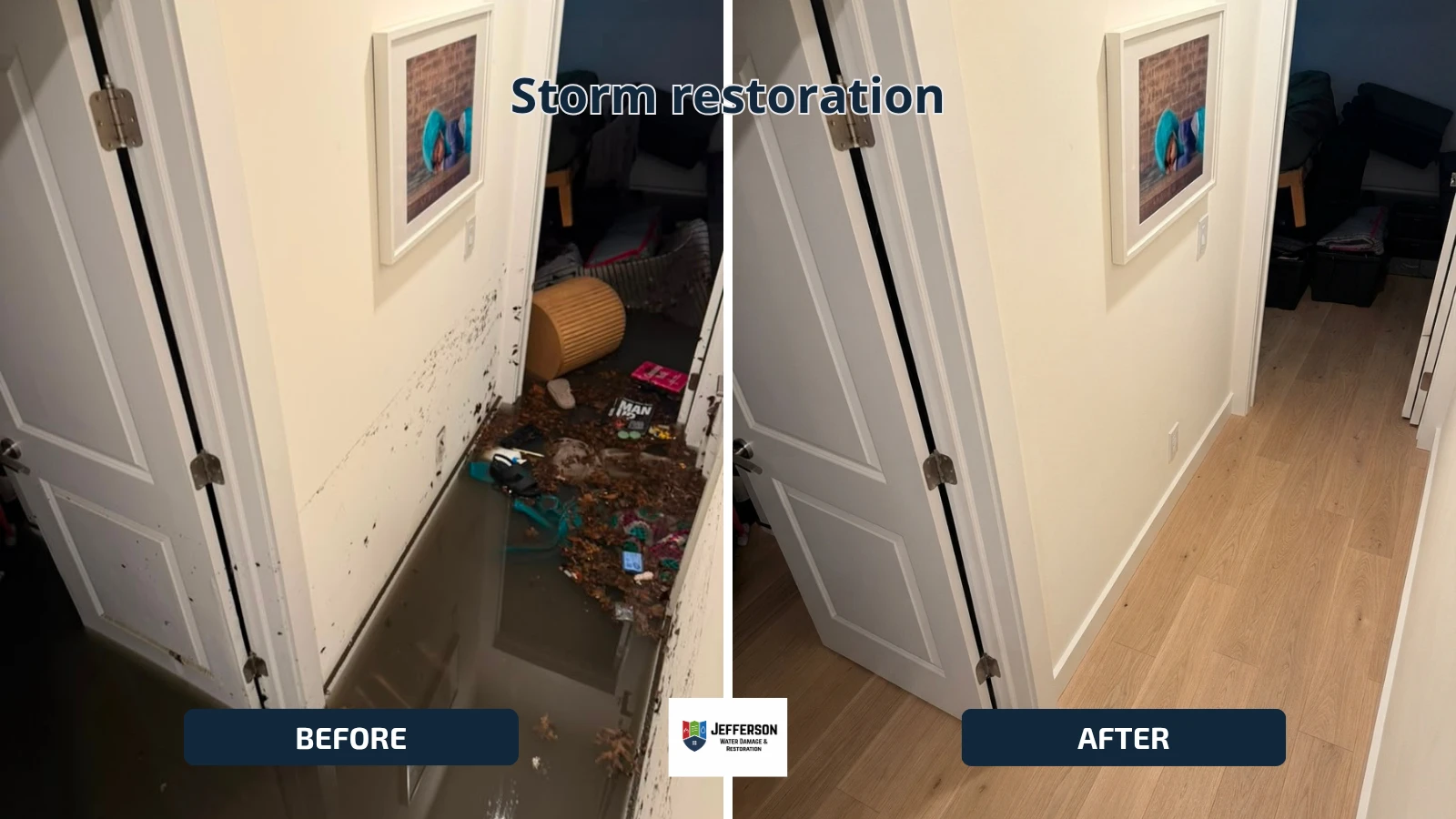
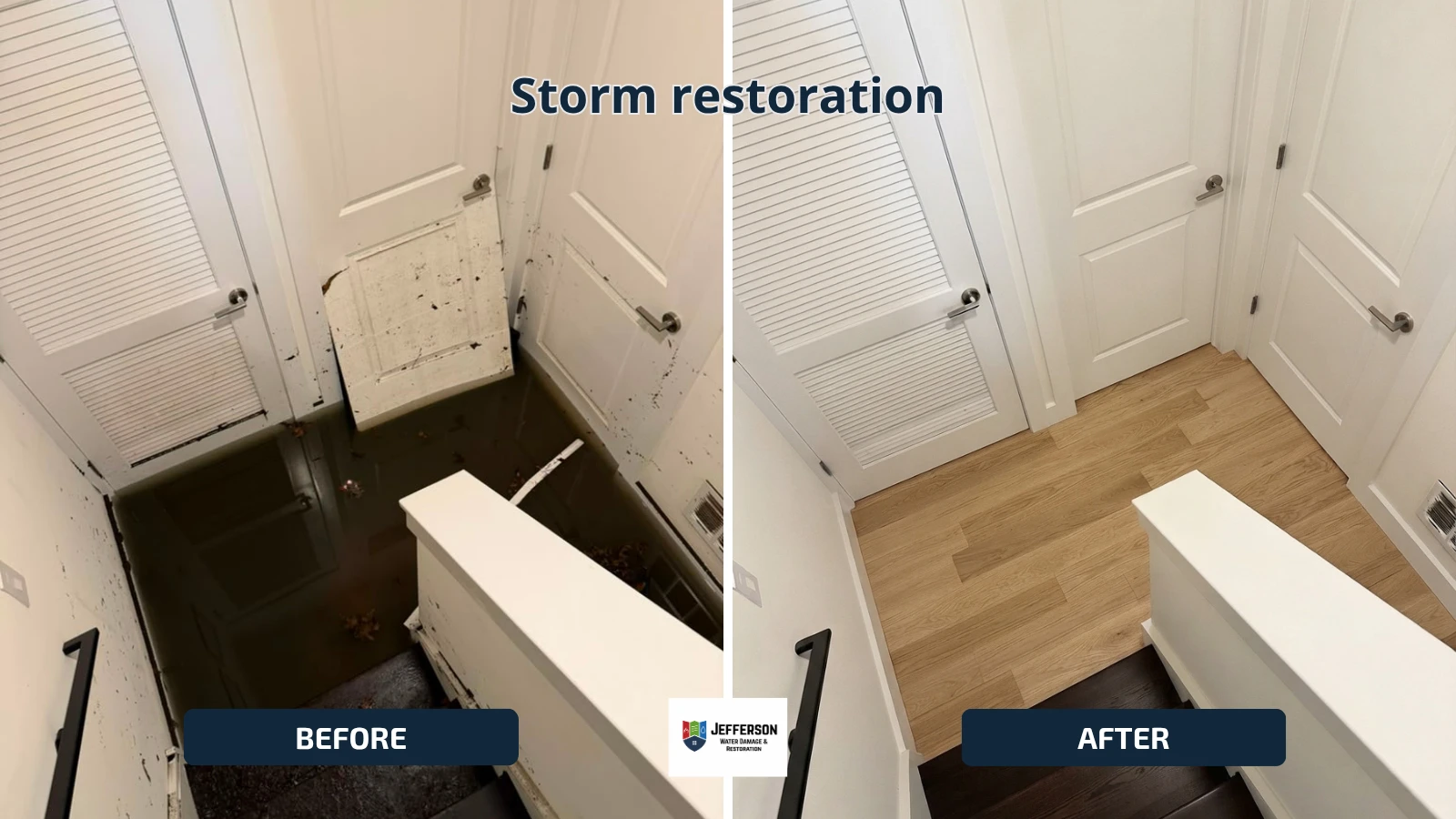
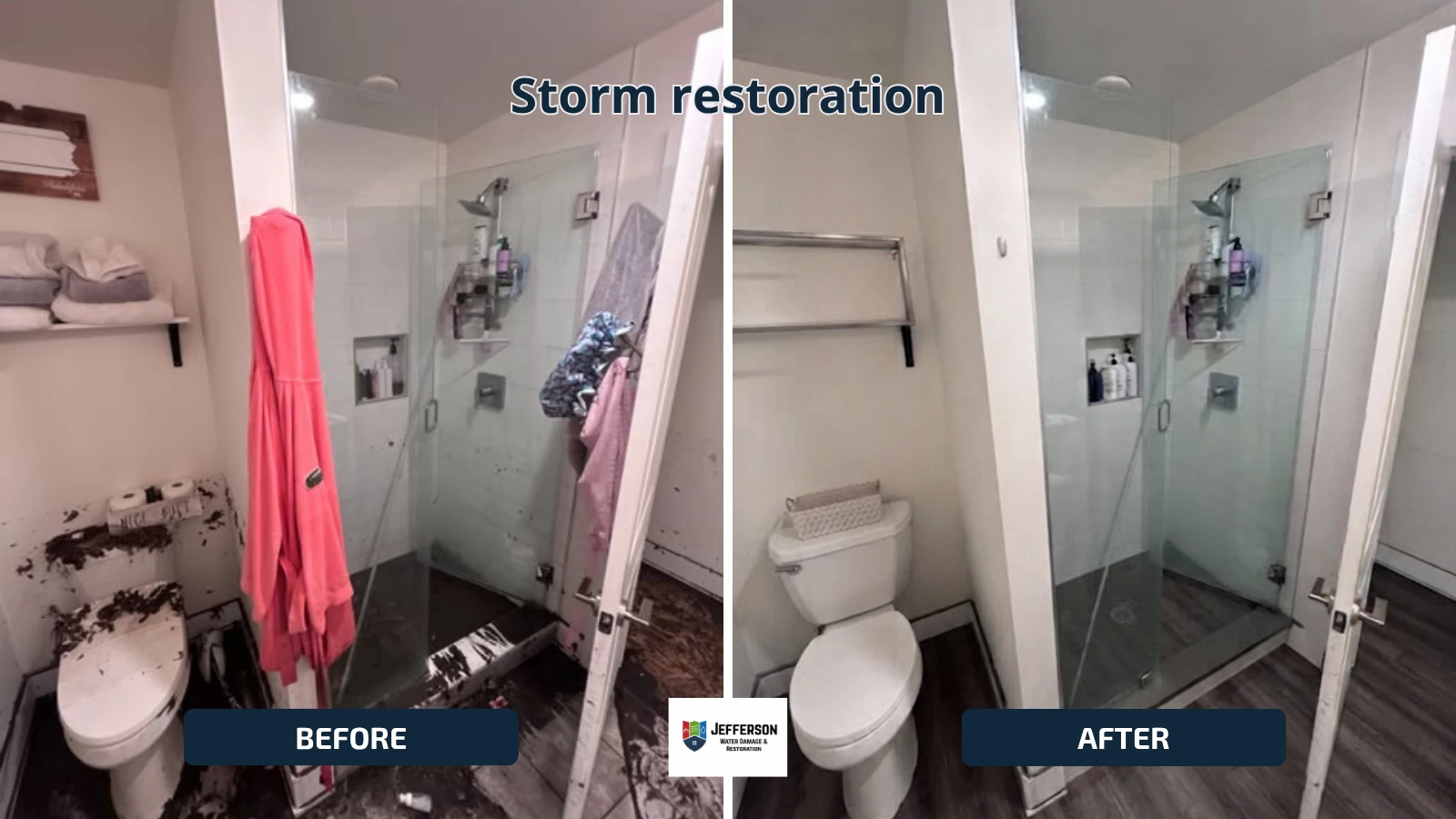
How Jefferson Restoration Works?
01
Immediate Response
24/7 emergency dispatch
02
Free Assessment
Transparent inspection and estimate
03
Insurance Coordination
We work directly with your provider
04
Restoration & Repair
From damage control to complete rebuild
Storm Damage Restoration Across All Philadelphia Neighborhoods
Jefferson serves every residential and commercial area in the city.
Our crews respond to storm emergencies in Center City, Old City, Society Hill, Northern Liberties (19123), Fishtown, Kensington, Port Richmond, Bridesburg, Brewerytown, Fairmount, Spring Garden, Germantown, Mt. Airy, Chestnut Hill, Manayunk, Roxborough, East Falls, Frankford, Mayfair, Oxford Circle, Fox Chase, Holmesburg, Torresdale, Bustleton, Somerton, West Philadelphia, University City, Cobbs Creek, Overbrook, South Philadelphia, Passyunk Square, Point Breeze, Grays Ferry, Eastwick, and Southwest Philadelphia.
We also serve surrounding communities including Upper Darby, Drexel Hill, Havertown, Media, Cheltenham, Jenkintown, Abington, Norristown, Conshohocken, and Bala Cynwyd. If a storm has hit your property anywhere in the
Frequently Asked Questions About Storm Damage Restoration in Philadelphia
How quickly can Jefferson respond to storm damage in Philadelphia?
Jefferson operates 24 hours a day, 7 days a week, 365 days a year. Because our team is based in Philadelphia at 443 W Girard Ave (zip 19123), we can reach most city neighborhoods within 1–2 hours of your call.
Emergency services within the first 24 hours after a storm can stop damage from spreading, stabilize building structures, and result in a more efficient, affordable restoration process, which is why we never put you on hold or send you to voicemail during a storm event.
What types of storm damage does Jefferson restore in Philadelphia?
We handle the full spectrum of storm damage common to Philadelphia properties: wind and high-wind structural damage, storm flooding and water intrusion (including basement flooding from overwhelmed city drains), hail damage to roofing and siding, winter storm and ice dam damage, fallen tree and debris impacts, and damage caused by sump pump failures during power outages.
Storm damage in Philadelphia often requires a comprehensive approach, including water extraction, debris removal, structural drying, and repairs all of which Jefferson performs in-house from start to finish.
Will my homeowner's insurance cover storm damage restoration in Philadelphia?
Standard Pennsylvania homeowner’s insurance policies cover wind, hail, and lightning damage. However, flooding caused by rising water (such as the Schuylkill or Delaware overflowing their banks) typically requires a separate flood insurance policy through NFIP or a private carrier.
Jefferson works with your insurance company to ensure your claim is accurately represented and processed efficiently. From Day 1, our technicians document all damage with photos, moisture readings, and written reports specifically formatted for insurance adjuster review. We recommend calling us before calling your insurer so documentation is complete and accurate.
How much does storm damage restoration cost in Philadelphia?
Costs vary significantly based on the type and severity of storm damage. On average, storm damage repairs cost about $12,000, but the cost of wind damage restoration varies dramatically based on what was hit and how badly.
Minor repairs, such as isolated siding or single window damage, may cost between $2,000 and $5,000, while major structural damage involving roofing, framing, and interior water intrusion can cost more.
Acting fast reduces the total cost. Mold growth becomes a concern within 24 to 48 hours of water infiltration, and professional mold remediation can add $500 to $6,000 to your restoration costs. Jefferson provides a free, no-obligation damage assessment so you know exactly what you’re facing before any work begins.
Can Jefferson handle both residential and commercial storm damage in Philadelphia?
Yes. Jefferson restores storm damage across residential properties (rowhouses, twins, detached homes, apartment buildings, condos) and commercial properties (retail, office, warehouse, and mixed-use) throughout all Philadelphia neighborhoods. Commercial clients benefit from a single dedicated project manager and a restoration plan designed to minimize business downtime. For large commercial losses, see our commercial water damage restoration page.
What should I do immediately after a storm damages my Philadelphia home?
First, ensure your family’s safety, do not enter areas with downed power lines, standing water near electrical panels, or visible structural collapse risk. When storms cause water intrusion near outlets and electrical systems, serious hazards including electric shocks, short circuits, or fires can arise, making a professional assessment critical. Once it is safe, document visible damage with photos and video before touching anything. Call Jefferson at 267-6410090 immediately, we’ll dispatch a certified technician, secure your property, and begin the documentation your insurance company will need. Do not discard damaged materials until after the adjuster’s inspection.
Does storm damage lead to mold growth in Philadelphia homes?
Yes, and it happens faster than most homeowners expect. Mold growth becomes a concern within 24 to 48 hours of water infiltration. Philadelphia’s humid summers and the moisture trapped in common rowhouse construction materials (plaster, older drywall, wood lath) make mold growth after storm flooding particularly likely. Jefferson’s restoration process includes proactive mold prevention treatments as a standard step. If mold is already present, our certified remediation team handles it directly.
Stop
Storm Damage Now
Get a Free Professional Inspection
Local experts • Fast response • No hidden fees