
Bathroom Mold Remediation in Philadelphia, PA
Worried about mold in your bath? Call us now at (267) 641-0090 for a free inspection. Available 24/7.
- 60 min response
- IICRC Certified #70209237
- We Handle Insurance
Request a Free Inspection
Local experts • Fast response • No hidden fees
Bathroom mold in a Philadelphia home is rarely just a surface problem. What looks like grout staining or a ceiling spot is often the visible edge of a larger moisture issue living inside your walls.
Jefferson Water Damage & Restoration Philadelphia responds 24 hours a day, seven days a week, from our location at 443 W Girard Ave in Philadelphia. We find the moisture source, remove the mold completely, and rebuild what comes out. Call us now at (267) 641-0090 for a free on-site inspection.
Why Philadelphia Bathrooms Are Especially Vulnerable to Mold
Philadelphia’s housing stock creates conditions that competitors from the suburbs rarely understand. Rowhouses across Fishtown, South Philadelphia, Brewerytown, and Kensington were built under construction standards that predated modern moisture control. Exhaust fans in many pre-1960s homes vent into the attic or into a shared party wall cavity instead of outside. Trapped humidity has nowhere to go. Mold follows.
Every bathroom generates significant moisture through showers, steam, and condensation. When that moisture can’t escape, it absorbs into grout lines, drywall, wood framing, and the cavities behind your tile surround. The EPA recommends keeping indoor relative humidity below 60 percent. Philadelphia’s hot, humid summers push many homes well above that threshold without proper ventilation.
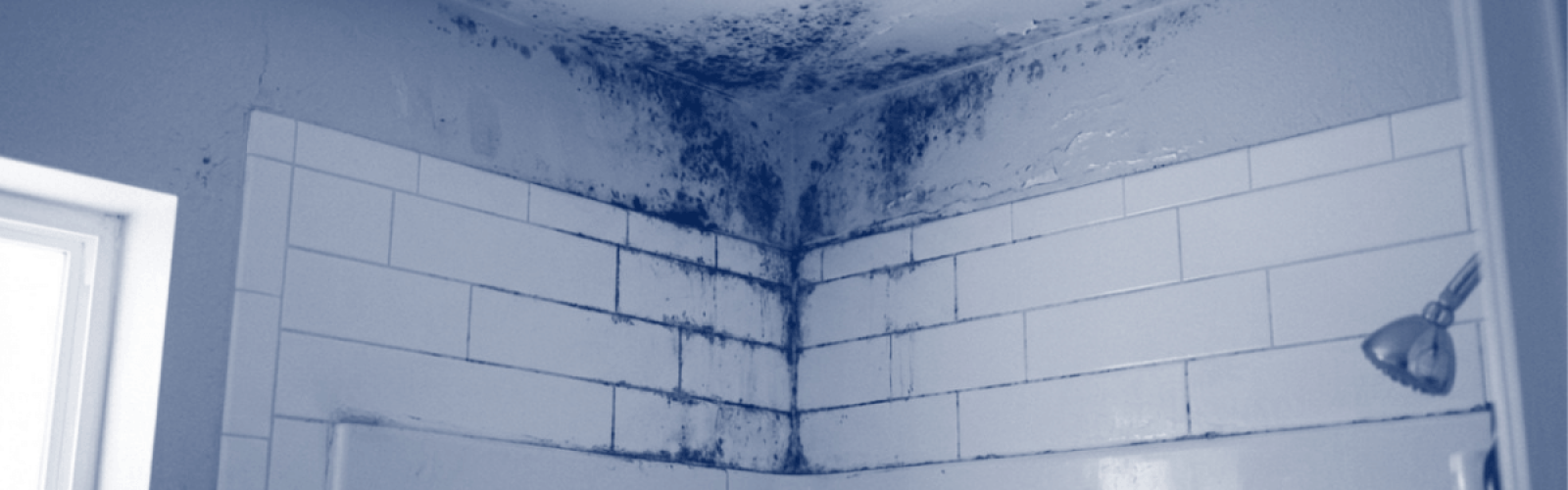
What you see on the grout or the ceiling corner is typically the leading edge of a larger problem. Mold grows inside wall cavities and under subfloors for weeks before it becomes visible. By the time a musty odor develops or tiles start to loosen, the contamination has usually spread beyond the reach of any household cleaner.
Warning Signs That Require a Professional Inspection
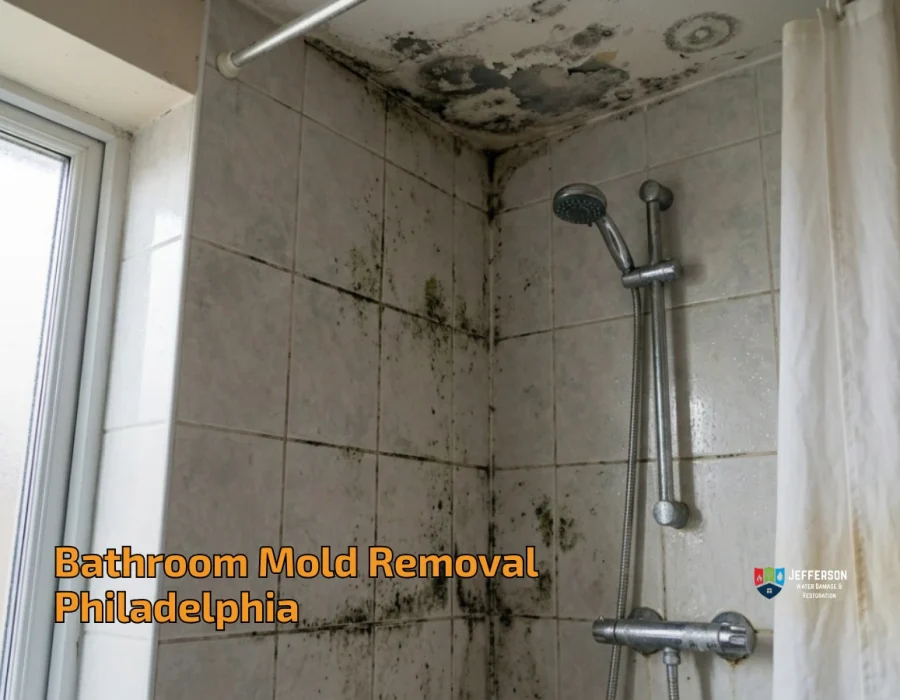
Some signs are obvious: dark blotchy growth on your bathroom ceiling, black buildup in the caulk around your tub, or fuzzy patches spreading through grout joints. Others are less immediate but equally serious.
Peeling paint or bubbling wallpaper near your shower surrounds moisture migrating behind the wall. A persistent musty odor after cleaning suggests active mold growth in a space you can’t access directly. Recurring stains that return within weeks of bleach treatment confirm the moisture source has not been corrected.
Pay attention to how your household feels at home. Unexplained sneezing, congestion, itchy eyes, and respiratory irritation that improve when you leave the house are common signs of airborne mold exposure. Children, elderly family members, and anyone with asthma or a compromised immune system are particularly vulnerable to these effects.
The EPA and CDC recommend professional remediation for any mold growth that covers more than 10 square feet. In Philadelphia rowhouses, that threshold is reached faster than most homeowners expect. If you are unsure what you are dealing with, a professional mold inspection gives you a clear picture before remediation begins.
Our Bathroom Mold Remediation Process, IICRC S520 Standard
Jefferson follows the ANSI/IICRC S520 standard for mold remediation. This is the industry protocol that defines how mold removal should be documented, contained, and verified. Most local companies mention it briefly. We apply it at every stage of the job.
Step 1: Inspection and Moisture Mapping
We begin with a thorough visual assessment and moisture meter readings throughout the bathroom. Thermal imaging cameras identify moisture migration behind the vanity, under the subfloor, and inside wall cavities that are invisible to the naked eye. This assessment defines the full scope of contamination before a single tile is removed.
Step 2: Source Correction
Removing mold without correcting the moisture source guarantees it returns. This is the most common failure point in the industry. If a slow drip behind the shower valve or a failing wax ring is feeding the growth, that gets addressed first. When the source is a hidden plumbing leak, we locate it before remediation begins. If the mold follows a water damage event, structural drying to verified moisture levels is part of that correction.
Step 3: Containment and Negative Air Pressure
Containment barriers isolate the work area from the rest of your home. We place the contained space under negative air pressure using HEPA air scrubbers that draw air inward and filter it before discharge. This prevents mold spores disturbed during removal from traveling to other rooms. HEPA filtration captures 99.97 percent of particles as small as 0.3 microns, well below the 2 to 10 micron size range of most mold spores.
Step 4: Material Removal and Mold Remediation
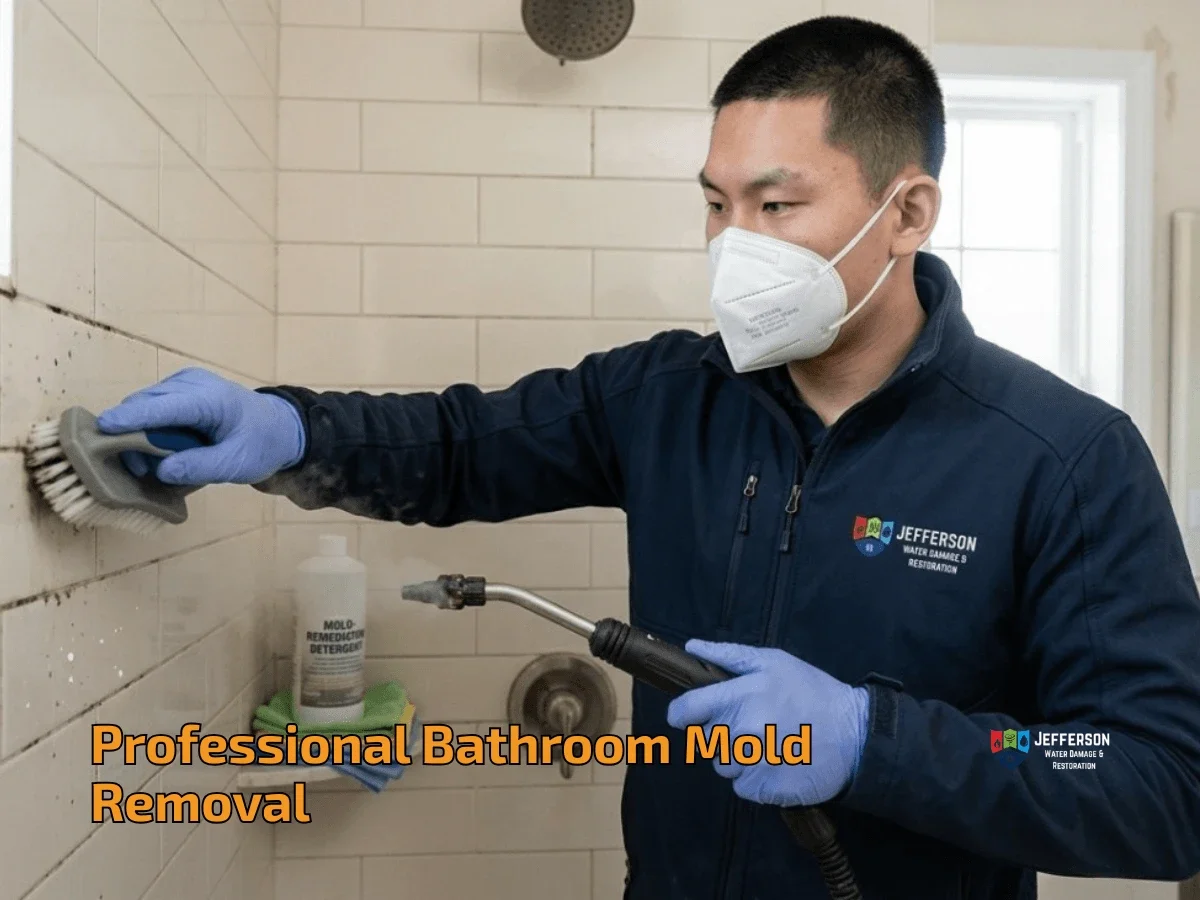
Porous materials with confirmed heavy contamination, drywall, insulation, subfloor sections, must come out. Semi-porous materials like wood framing and concrete block can often be saved with HEPA vacuuming and an EPA-registered antimicrobial formulated specifically for mold remediation. We document every material removed with photos and written records.
Bathrooms present specific challenges here. Getting behind a tub surround, under a vanity, or beneath a shower pan requires removing fixtures. Jefferson handles this in-house. We do not subcontract the hard parts.
Step 5: Drying and Air Quality Restoration
Industrial air movers and commercial dehumidifiers dry the treated area completely. Running fans without professional drying equipment leaves residual moisture in wall cavities and subfloor assemblies that will feed new mold growth within weeks. We monitor readings daily until materials reach acceptable moisture levels.
Step 6: Post-Remediation Verification
The S520 standard calls for post-remediation verification by an independent inspector with no financial relationship to the remediation contractor. We support this step and can refer you to independent mold testing services to confirm clearance before reconstruction begins. You should not have to take our word for it.
Bathroom Mold Remediation Cost in Philadelphia
Surface mold limited to grout, caulk, and accessible tile typically falls in the $500 to $2,000 range. These are the most straightforward bathroom jobs: visible contamination, identifiable source, no structural material removal required.
The scope and cost increase significantly when mold grows in hard-to-reach places, such as behind your tub surround, inside the wall cavity behind a shower valve, or under the subfloor beneath a leaking toilet. The extent of contamination can influence the pricing of jobs involving structural material removal and fixture relocation.
Most remediation professionals charge between $10 and $25 per square foot. A 100-square-foot bathroom job at mid-range pricing lands around $1,000 to $2,500 before any reconstruction is factored in.
If mold testing was not completed before you called us, it will typically cost an additional $250-$350 if a lab test is necessary. Jefferson offers a free on-site inspection and written estimate before any work begins. There are no surprise charges after the fact.
On insurance: homeowners policies generally do not cover bathroom mold unless it originates from a sudden, accidental water event. Slow leaks and long-standing moisture problems are usually classified as neglect and excluded from coverage.
If your mold traces back to a burst pipe or another covered water event, the claim has a stronger foundation. Jefferson documents every job with photos, moisture readings, and written scope notes to give your adjuster what they need. We communicate directly with insurance carriers throughout the process.
Why Bathroom Mold Keeps Coming Back in Philadelphia Rowhouses
If mold returns to the same spot weeks after cleaning, the underlying moisture problem was never fixed. This is the most common pattern we see in older Philadelphia homes across neighborhoods like Port Richmond, Grays Ferry, Point Breeze, and Strawberry Mansion.
The structural culprits repeat across the city’s older housing stock. Exhaust fans in pre-1960s construction were frequently vented into the attic or routed through party wall cavities instead of exhausting to the exterior. That moisture feeds attic mold problems directly above the bathroom. Deteriorated grout and caulk in shower surrounds allow water to migrate steadily into the wall cavity over years. Shared plumbing stacks in rowhouses transfer condensation between units.
After remediation, the most effective prevention steps are straightforward. Replace your exhaust fan with a unit rated at 80 to 110 CFM and confirm it vents to the exterior, not the attic. Run the fan for at least 20 minutes after every shower. A humidity-triggered fan switch automates this. Reseal grout lines and caulk annually. The EPA recommends keeping indoor relative humidity between 30 and 50 percent year-round.
If moisture from the bathroom is reaching your ceiling and the floor above, ceiling water damage may already be present. We check for this during every inspection.
What Happens When Bathroom Mold Goes Untreated
Bathroom mold does not stabilize on its own. It spreads through grout, into drywall paper, behind tile backer board, and down into subfloor materials. What begins as a superficial cleanup job becomes a structural project if it is left for another season.
Health effects escalate with prolonged exposure. Mold spores trigger respiratory irritation, allergic reactions, and worsening asthma. Toxic mold species like Stachybotrys chartarum, commonly called black mold, are associated with more serious neurological and immune effects in some individuals.
The CDC notes that people with chronic lung disease or compromised immune systems face heightened risk of respiratory infection from mold exposure.
Mold also rarely stays in just one room. Spores carried by HVAC systems and airflow patterns spread to adjacent spaces. Bathroom mold in a second-floor rowhouse can establish colonies in the basement below through moisture migration in shared wall cavities. If you are also seeing signs in your lower level, our basement mold remediation team can assess both areas in the same visit.
How Jefferson Restoration Works?
01
Immediate Response
24/7 emergency dispatch
02
Free Assessment
Transparent inspection and estimate
03
Insurance Coordination
We work directly with your provider
04
Restoration & Repair
From damage control to complete rebuild
Serving All Philadelphia Neighborhoods and Surrounding Communities
Jefferson is based at 443 W Girard Ave, Unit 3G, in the heart of Philadelphia.
We serve the full city: South Philadelphia, Northern Liberties, Port Richmond, Fairmount, Spring Garden, Old City, Center City, Rittenhouse Square, Graduate Hospital, West Passyunk, East Falls, East Passyunk, Bella Vista, Queen Village, Pennsport, Germantown, Roxborough, Manayunk, Chestnut Hill, Mount Airy, University City, Logan, Olney, Mayfair, Bustleton, and Northeast Philadelphia.
We also respond to calls from Upper Darby, Lansdowne, Drexel Hill, Havertown, Cheltenham, Jenkintown, Abington, Norristown, Conshohocken, Bala Cynwyd, and Ardmore. If you are close to Philadelphia and dealing with bathroom mold, call us and we will confirm coverage in your area.
Frequently Asked Questions
How long does bathroom mold remediation take?
A small, contained bathroom job with surface growth and a clear moisture source typically takes one to two days from start to clearance. Jobs involving mold behind walls, under the subfloor, or requiring fixture removal and material replacement generally run three to five days. Jefferson gives you a clear timeline during the free inspection before work starts.
Can I stay in my home during bathroom mold remediation?
For limited surface work in a single room, containment protocols usually allow you to remain in other parts of the house. For jobs involving significant material removal or widespread contamination, we recommend you arrange to be away during active remediation. Mold is most disruptive to air quality at the moment of removal. Our technicians advise you on this directly based on what the inspection finds in your specific bathroom.
Does bathroom mold remediation in Philadelphia require permits?
Remediation work alone generally does not require a permit. If reconstruction involves structural work, electrical, or plumbing modifications, permits may apply. Jefferson handles this assessment during the project planning phase and advises you on what is required for your specific job.
Why does mold keep returning after I clean it myself?
Cleaning the surface removes visible mold but leaves the moisture source intact. Mold grows back because the underlying condition never changed. In Philadelphia rowhouses, common hidden causes include exhaust fans vented improperly, deteriorated caulk and grout, and slow plumbing leaks inside the wall. If mold is recurring in your bathroom, a leak detection inspection often finds the source within the first visit.
Can Jefferson handle the bathroom restoration after mold removal?
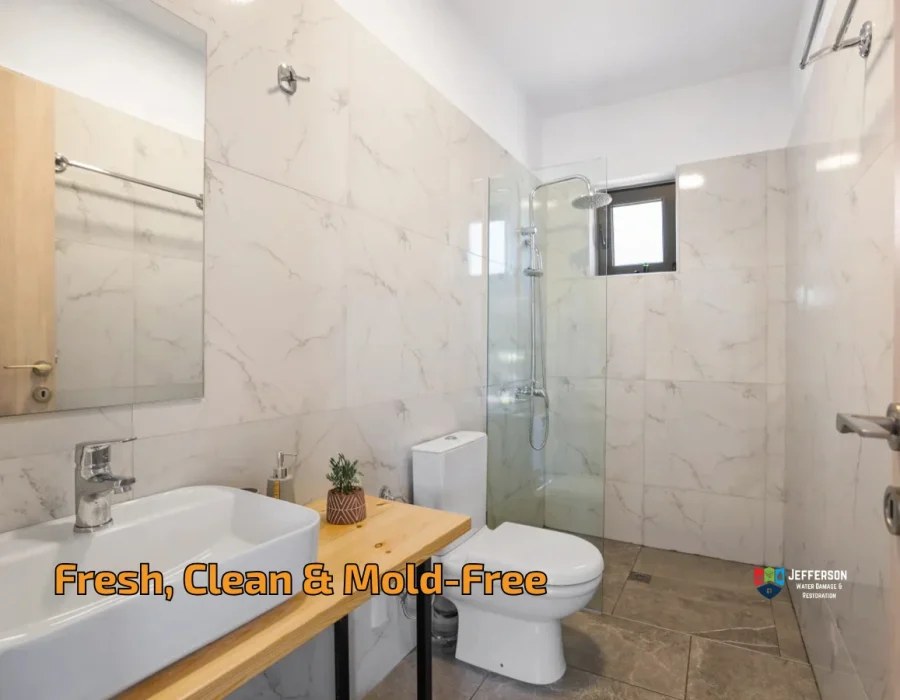
Yes. We rebuild what we remove. New drywall, tile, caulk, and vanity reinstallation are handled in-house. If the remediation scope creates an opportunity to update the space, our bathroom remodeling team can take the project from mold removal to finished renovation. You work with one company through the full process.
Stop
Mold Growth Now
Get a Free Professional Inspection
Local experts • Fast response • No hidden fees