Philadelphia Mold Remediation / South Philadelphia
Mold Remediation in South Philadelphia, PA
Worried about mold in your home? Call us now at (267) 641-0090 for a free inspection. Available 24/7.
- 60 min response
- IICRC Certified #70209237
- We Handle Insurance
South Philly homes we know
- East Pasayunk
- Point Breeze
- Pennsport
- Bella Vista
- 24/7 Dispatch
Local knowledge matters
Mold in a row house usually goes deeper than what you can see
Row after row of South Philadelphia homes share a wall with the house next door, and that construction choice comes with a moisture problem most owners don’t see until it’s already established.
Water pools on flat roofs instead of draining off them. Moisture crosses from one property to the next through shared masonry party walls. Basements built before vapor barriers existed let ground moisture seep in through aging mortar joints. Any single one of these can grow mold well before it’s visible or smelled.
Jefferson Water Damage & Restoration Philadelphia works these blocks regularly, from Passyunk Square to Point Breeze to Bella Vista. We track down where the moisture is actually coming from, remediate the affected area, and take care of the repairs afterward, so you’re not stuck lining up a second contractor once the mold work is done.
Local Inspection Focus
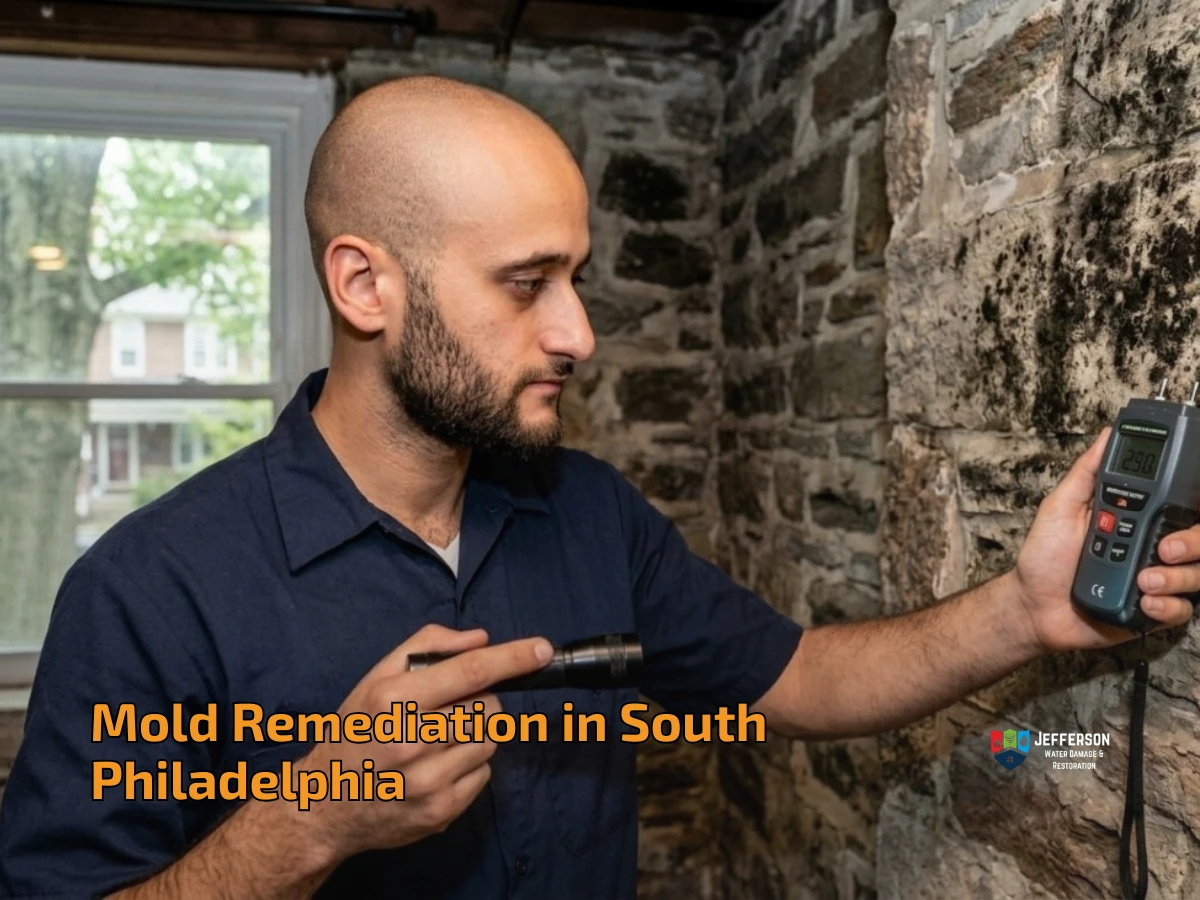
Where Mold Often Hides in a South Philly Row House
- Ceiling areas and top-floor walls below flat roofs
- Behind shared party walls
- Along basement perimeters and under finished floors
- Inside plumbing cavities behind bathrooms and kitchens
Our free inspection includes moisture readings and a systematic review of the areas most likely to hide mold in attached South Philadelphia homes.
Built for the housing stock
Common Mold Problems We See in South Philadelphia
Flat roofs and parapet walls
A lot of South Philly rowhomes are still running their original tar-and-gravel roofing, and that system typically lasts about 20 years. Once a membrane fails or a scupper clogs, water sits instead of draining and finds its way into the ceiling joists and the walls below. A ceiling stain usually means the moisture has already been there for a while.
Shared party walls
In an attached rowhouse, a plumbing leak or roof issue on the neighbor's side can travel through the shared masonry and turn up as mold on your side, with no water ever having entered through your own roof or pipes. It's one of the most overlooked mold sources in the neighborhood.
Pre-war basements
Stone and brick foundations from the late 1800s and early 1900s went up without vapor barriers. As that original mortar breaks down, it opens a path for ground moisture to reach the basement walls and floor.
Humidity that has nowhere to go
Philadelphia's average outdoor humidity sits consistently above 60%, the point where mold actively grows on organic material. Older South Philly homes without central HVAC have no reliable way to move that moisture back out, so it settles into wood framing, drywall, and masonry instead.
None of this is seasonal. It’s built into how these homes were put together, which is why a musty smell in a Dickinson Narrows basement, or a dark patch behind a wall in a Queen Village trinity home, usually points to something that’s been building for a while.
Built for the housing stock
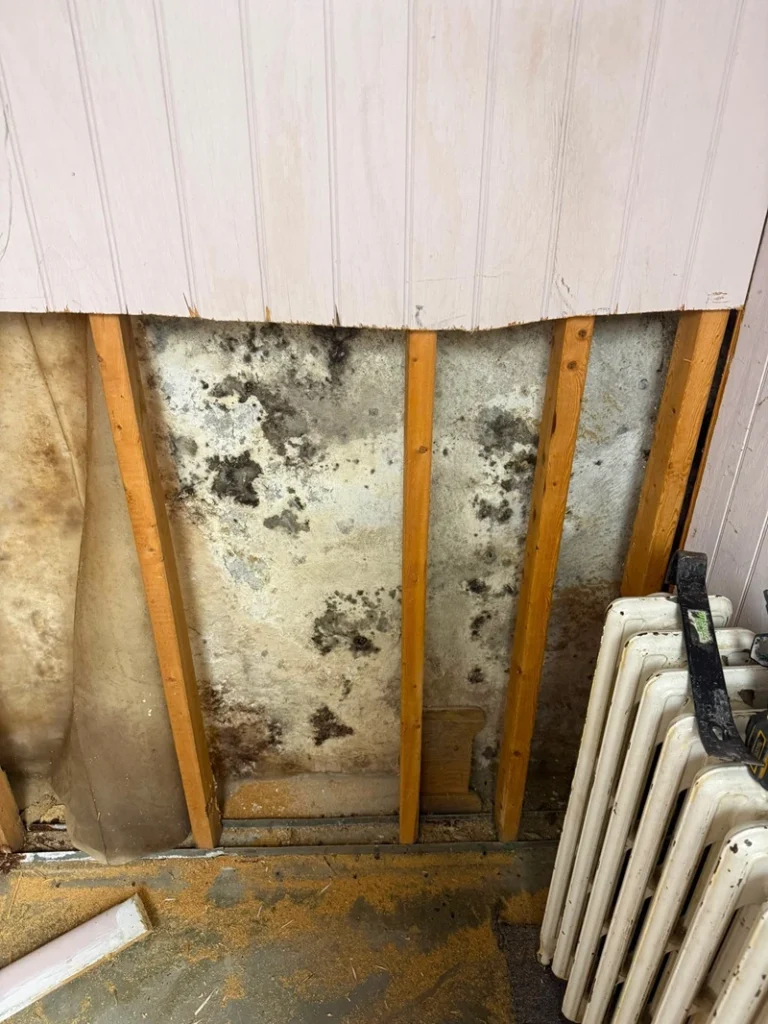
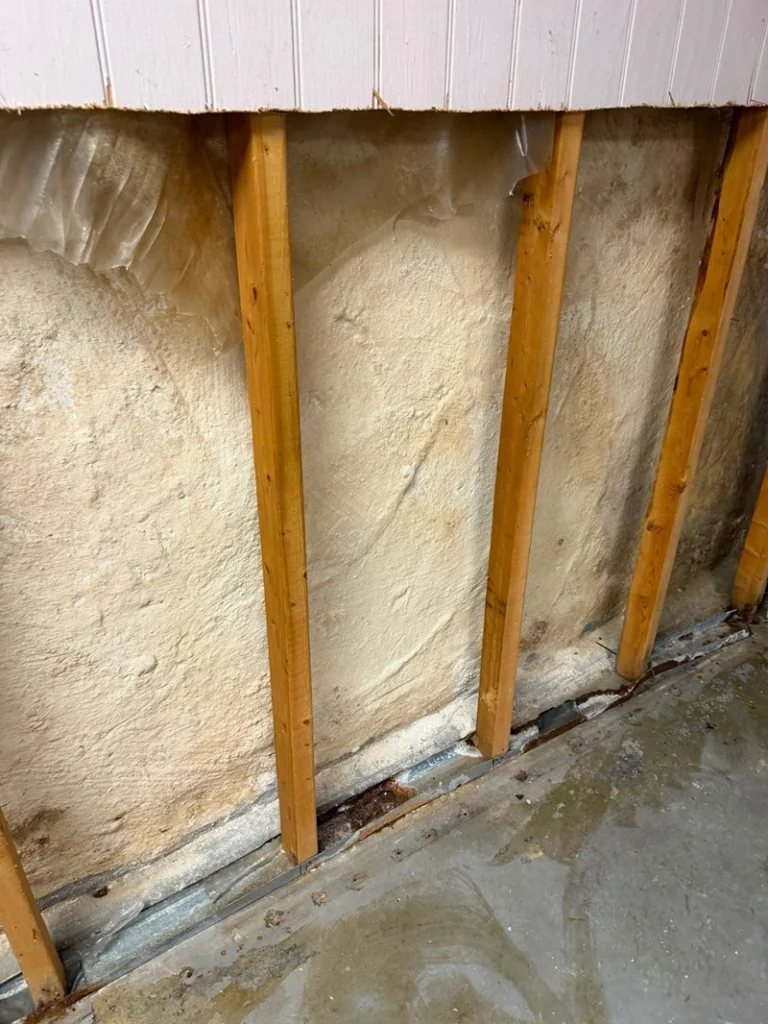
Recent Mold Remediation Work in South Philadelphia
These photos show examples of mold remediation work completed by our team. Every property is different, but our approach remains consistent: identify the moisture source, contain the affected area, remove contaminated materials, clean the space, and restore what was damaged.
One team, from start to finish
Our Mold Remediation Process
We find the full extent of the problem, stop the moisture, contain the work area, remove contaminated material, clean the air, prove the result, and rebuild what was opened.
01
Finding the moisture source comes first
Skip that step and the remediation doesn’t hold. If the problem traces back to a hidden plumbing leak, our leak detection team can trace it in the same visit, using moisture meters and, when needed, thermal imaging to look inside walls and above ceilings without cutting anything open.
02
Then we contain the area
In an attached rowhouse, a neighboring unit can pick up cross-contamination fairly easily, so plastic barriers and negative air pressure go up before any affected material is disturbed.
03
HEPA air filtration runs throughout the job
And after it wraps up, catching airborne particles you wouldn’t otherwise see.
04
Materials that can't be saved come out
Affected drywall, insulation, and subfloor decking that won’t clean properly are removed and disposed of correctly.
05
Materials that can be saved get treated
Once the affected material is out, remaining structural framing and masonry are cleaned and treated.
06
Everything gets documented
Photos, moisture readings, and a written scope of work, for your own records and for your insurance carrier if you’re filing a claim.
07
And then we rebuild what came out
Drywall, framing, tile, flooring. Jefferson handles that as part of the same project, so there’s no second contractor to track down once remediation ends.
Fixing the moisture source is what actually keeps mold from coming back. Clean the surface without addressing the cause, and there’s a good chance you’re doing this again next year. If you’re not sure whether what you’re seeing needs remediation at all, our mold inspection team can take a look first.
Proof Before We Call the Job Done
DOCUMENTED FINDINGS
We document moisture readings, affected materials, visible mold growth, and the suspected moisture source. You receive clear information about what we found and why remediation was needed.
VERIFIED COMPLETION
After remediation, we document the completed work and perform post-remediation clearance testing. You receive written confirmation of the condition of the remediated area.
One team, from start to finish
Mold Remediation by Property Type in South Philadelphia
Attached rowhouses
The most common property type in South Philadelphia. Because of the shared party walls, we check both the source room and the adjoining wall for moisture migration before we call a job finished.
Trinity homes
Common in pockets of Queen Village and Bella Vista. Their compact, stacked layout means moisture on a lower level can climb through tight stairwells and shared chases.
Basement units and English basements
Common in Point Breeze and Grays Ferry, where older basements have been converted into livable or rental space. These need extra attention on the perimeter walls and any grade-level moisture intrusion.
Mixed-use and commercial buildings
Along corridors like East Passyunk Avenue and Broad Street, older mixed-use buildings often stack residential units above ground-floor commercial space, so a single roof or plumbing issue can end up affecting more than one tenant.
Why Jefferson
IICRC Certified #70209237
Our technicians are trained and certified to industry standards.
60-minute response
Available 24/7. We pick up the phone and can be on-site fast.
We handle your insurance
We work directly with your insurance company and provide Xactimate estimates that adjusters accept.
No hidden fees
Free inspection. Transparent pricing. No surprises on your invoice.
Complete restoration
We rebuild what was damaged. No second contractor needed.
Serving Greater Philadelphia since 2016
Hundreds of homeowners helped across the city and surrounding areas.
Frequently Asked Questions About Mold in South Philadelphia
Not sure what is behind the wall?
A free inspection can document moisture and help determine whether you need remediation.
How do I know if I have a mold problem in my South Philadelphia rowhouse?
Look for a persistent musty odor, especially near basements or party walls, dark ceiling staining, peeling paint on upper floors, or discoloration around tile grout. Mold in South Philadelphia rowhouses often develops behind walls before it’s ever visible, since moisture from a flat roof or a shared wall travels through the structure before it surfaces.
An on-site inspection with moisture readings is the most direct way to find out what’s actually going on.
Can mold come from my neighbor's property through our shared wall?
Yes, and it happens more often here than most homeowners expect. In an attached rowhouse, a plumbing leak or roof problem next door can travel through the shared masonry and introduce moisture into your wall, sometimes without a single drop of water entering through your own roof or pipes.
Does mold remediation fix the damage to my walls and ceilings, or just remove the mold?
On its own, remediation covers containment, removal of affected materials, and treatment of hard surfaces. It doesn’t automatically put your home back together. Jefferson does both: once the affected drywall, insulation, or subfloor comes out, our team completes the repairs, drywall, framing, tile, finishes, as part of the same project.
Will my homeowners insurance cover mold remediation?
Coverage depends on your individual policy and the cause of the damage. Sudden and accidental water damage from a plumbing failure may be covered, depending on the circumstances, while mold from a long-term or gradual leak is typically excluded.
We document the damage with photos, moisture readings, and a written scope of work, and we communicate with your adjuster about the restoration work. Your insurance carrier makes the final coverage determination.
Can you document the mold damage for my landlord or property manager?
Yes. We document visible mold, moisture readings, the affected areas, and the suspected moisture source, giving you a clear written record to share with a landlord or property manager.
How much does mold remediation cost in South Philadelphia?
Smaller, contained projects typically run $1,500 to $3,000. Larger jobs involving multiple rooms or structural repairs can reach $3,000 to $10,000 or more, depending on scope, generally working out to $10 to $25 per square foot.
Flat-roof intrusion and party-wall migration can add complexity in South Philadelphia specifically, so we give you an exact number after a free on-site inspection.
How quickly can Jefferson respond in South Philadelphia?
We’re available 24/7, with a 60-minute response commitment for active situations.
When mold is already present without an active water event, we schedule inspections quickly and can usually hand you a clear scope of work during that same visit.
Nearby Neighborhoods We Also Serve
Passyunk Square, East Passyunk, East Passyunk Crossing, Bella Vista, Point Breeze, Grays Ferry, Queen Village, Dickinson Narrows, West Passyunk, Newbold, Pennsport, Whitman, Graduate Hospital.
ZIP codes: 19112, 19145, 19146, 19147, 19148.
Schedule Your Free Mold Inspection in
South Philadelphia
Mold does not stop growing while you wait. If you have found mold or noticed signs that suggest it, the right move is an inspection now, not later.
Local team • Fast response • No hidden fees