
Philadelphia Mold Remediation / East Falls
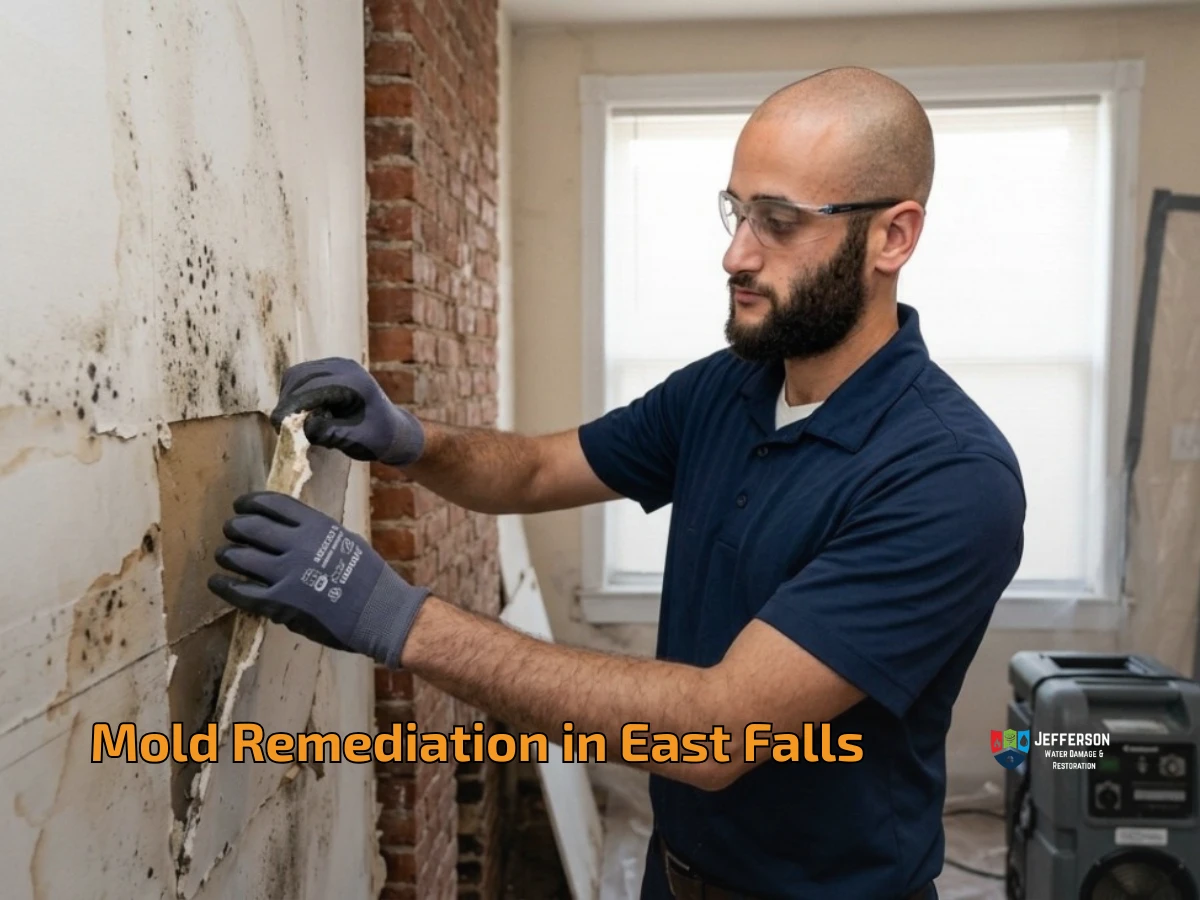
Mold Remediation in East Falls, PA
Found mold, or noticed something musty you can’t trace in your East Falls home? We can tell you exactly what’s happening.
- 60 min response
- IICRC Certified #70209237
- We Handle Insurance
From inspection to mold remediation and renovation
Local knowledge matters
Mold in a row house usually goes deeper than what you can see
Own a stone twin, a rowhome, or a detached house on one of East Falls’s hillside streets? You’ve probably already seen what moisture does to these buildings.
Built into sloped lots near the Schuylkill and Wissahickon, homes here carry stone foundations and plaster walls that predate any modern moisture barrier. A burst pipe isn’t required for water to get in. Grade drainage, porous mortar joints, and hillside runoff manage that on their own.
Jefferson Water Damage & Restoration Philadelphia works in these homes regularly. We track down where the moisture is actually coming from, remediate the affected area, and take care of the repairs afterward, so you’re not left lining up a second contractor once the mold work is done.
Local Inspection Focus
Where Mold Often Hides in an East Falls Home
- Along stone foundation walls and mortar joints
- Behind plaster-over-lath in older walls
- Around basement perimeters facing the hillside grade
- Inside plumbing cavities behind bathrooms and kitchens
Our free inspection includes moisture readings and a systematic review of the areas most likely to hide mold in East Falls’s stone and plaster homes.
Built for the housing stock
Common Mold Problems We See in East Falls
Stone foundations on hillside lots
Plenty of East Falls twins and detached homes sit on sloped ground near the Wissahickon and Schuylkill, and here moisture arrives through the stone foundation and the grade itself, not through a shared wall. Rain runoff heads downhill and settles against the foundation before it ever gets the chance to drain away.
Hydrostatic pressure from clay-heavy soil
Saturate this region's clay soil and it expands, pushing against foundation walls. That pressure can push moisture through cracks and block walls straight into a basement, even where there's no visible leak at all.
Plaster-over-lath walls
This construction, common across East Falls's 1920s to 1940s housing stock, holds moisture for a long stretch without ever showing it on the surface. A slow leak behind one of these walls can feed mold for months before anyone catches it.
Clay sewer laterals and root intrusion
Tree roots tend to work their way into older clay sewer lines, and the slow leaks that result near foundation walls and crawl spaces often go unnoticed until moisture damage is already underway.
Humidity with nowhere to go
Philadelphia gets roughly 42 inches of rain a year and averages 64% humidity, well above the 60% threshold where mold actively germinates. Without central HVAC, older East Falls homes have few ways to push that moisture back out.
None of this is seasonal. It comes down to how these homes sit on the land and how they were built, which is why a musty smell in a basement near Midvale Avenue, or a dark patch behind a wall closer to Kelly Drive, usually points to something that’s been building for a while.
Built for the housing stock
Recent Mold Remediation Work in East Falls
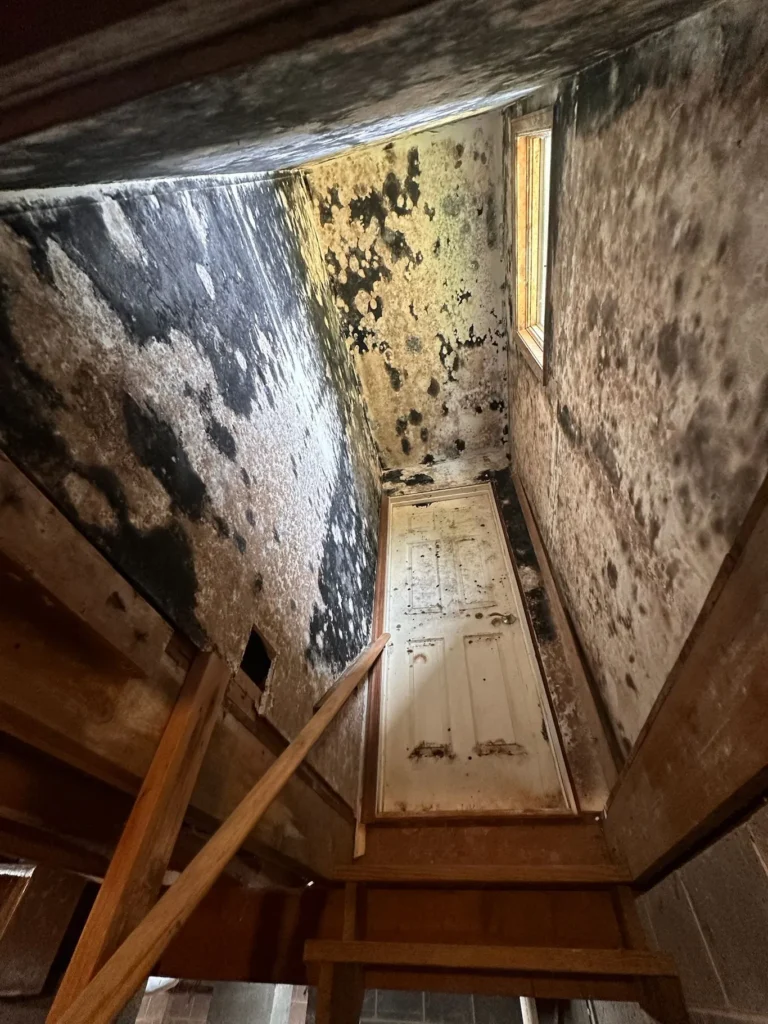
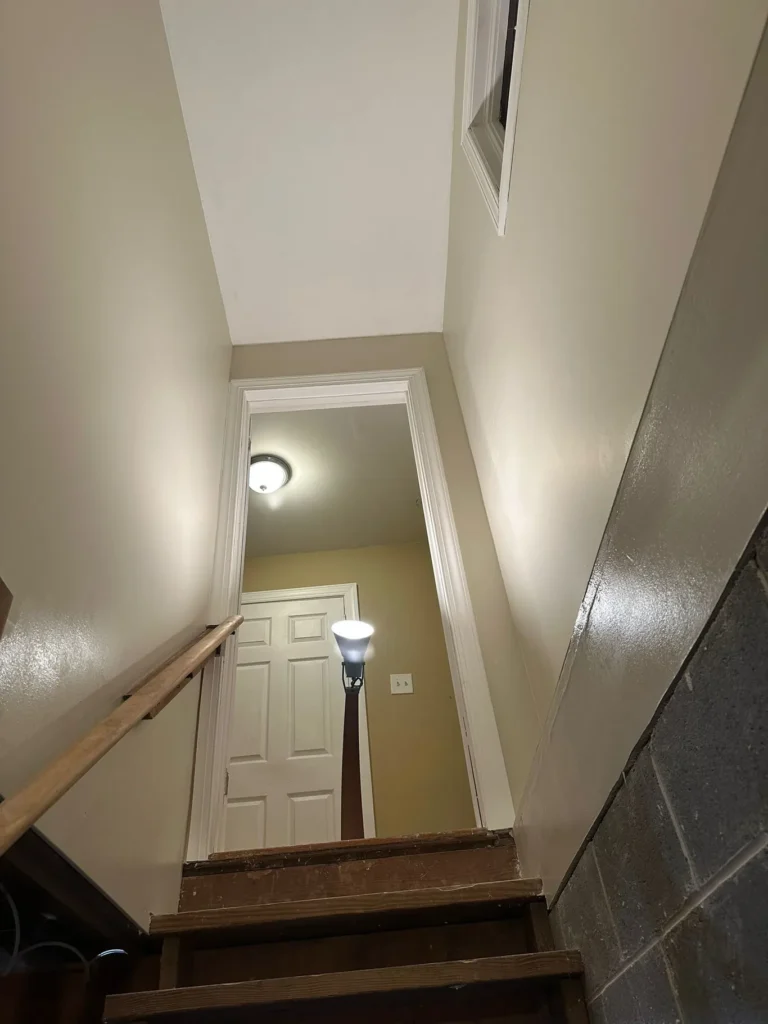
These photos show examples of mold remediation work completed by our team. Every property is different, but our approach remains consistent: identify the moisture source, contain the affected area, remove contaminated materials, clean the space, and restore what was damaged.
One team, from start to finish
Our Mold Remediation Process
We find the full extent of the problem, stop the moisture, contain the work area, remove contaminated material, clean the air, prove the result, and rebuild what was opened.
01
Finding the moisture source comes first
Inside a stone foundation or behind plaster-over-lath, mold can be growing somewhere thermal imaging and moisture meters will catch long before it’s visible to the eye. When the source turns out to be a hidden plumbing leak, our leak detection team can trace it during the same visit.
02
Then we contain the area
Plastic barriers and negative air pressure go up before anything affected is disturbed, so spores can’t travel far once the work begins.
03
HEPA air filtration runs throughout the job
And continues after it wraps, catching airborne particles that would otherwise go unnoticed.
04
Materials that can't be saved come out
Affected plaster, drywall, insulation, or subfloor that won’t clean properly gets removed and disposed of correctly.
05
Materials that can be saved get treated
Once the affected material is gone, remaining structural framing and stone or masonry surfaces are cleaned and treated.
06
Everything gets documented
Photos, moisture readings, and a written scope of work, both for your own records and for your insurance carrier if you’re filing a claim.
07
And then we rebuild what came out
Drywall, plaster, framing, finishes. Jefferson handles that as part of the same project, so there’s no second contractor to chase down once remediation ends.
What actually keeps mold from coming back is correcting the moisture source. In East Falls, that sometimes means tackling hillside drainage or a foundation crack alongside the interior work, not just treating whatever’s visible inside. Not sure whether what you’re looking at even needs remediation? Our mold inspection team can take a look first.
Proof Before We Call the Job Done
DOCUMENTED FINDINGS
We document moisture readings, affected materials, visible mold growth, and the suspected moisture source. You receive clear information about what we found and why remediation was needed.
VERIFIED COMPLETION
After remediation, we document the completed work and perform post-remediation clearance testing. You receive written confirmation of the condition of the remediated area.
One team, from start to finish
Mold Remediation by Property Type in East Falls
Stone twins and detached homes
Common along East Falls's hillside streets. Stone foundations and exterior grade drainage get checked alongside the interior moisture source, since one is often tied to the other.
Rowhomes
Found throughout the flatter stretches of the neighborhood. Plaster-over-lath walls and basement perimeters are where moisture most often settles without announcing itself right away.
Apartment buildings and converted units
This includes loft and studio-style conversions inside older mill buildings. Shared ventilation and aging plumbing runs mean a moisture problem in one unit can spread into the space next door.
Properties near Kelly Drive and lower-lying lots
Sitting closer to the Schuylkill means more attention goes toward grade drainage and foundation moisture, especially after heavy rain.
Why Jefferson
IICRC Certified #70209237
Our technicians are trained and certified to industry standards.
60-minute response
Available 24/7. We pick up the phone and can be on-site fast.
We handle your insurance
We work directly with your insurance company and provide Xactimate estimates that adjusters accept.
No hidden fees
Free inspection. Transparent pricing. No surprises on your invoice.
Complete restoration
We rebuild what was damaged. No second contractor needed.
Serving Greater Philadelphia since 2016
Hundreds of homeowners helped across the city and surrounding areas.
Frequently Asked Questions About Mold in East Falls
Not sure what is behind the wall?
A free inspection can document moisture and help determine whether you need remediation.
How do I know if I have a mold problem in my East Falls home?
Watch for visible discoloration, black, green, or grey patches on basement walls, floor joists, or plaster baseboards, paired with a musty smell that won’t clear even with ventilation. Mold in East Falls’s stone and plaster construction can grow inside wall cavities for months before it ever shows on the surface.
If you’ve had any water event and the area wasn’t professionally dried, mold is a real possibility even without visible signs.
An on-site inspection with thermal imaging and moisture readings is the most direct way to know for certain.
What causes mold in East Falls homes specifically?
A handful of things are particular to this neighborhood. Stone foundations on hillside lots skip modern waterproofing, and porous mortar joints let moisture through during heavy rain or when runoff drains toward the wall.
Plaster-over-lath construction soaks up moisture without showing damage on the surface, so a slow leak can feed mold for a long stretch before anyone catches it. Sitting close to the Schuylkill and Wissahickon keeps the ground saturated during wet seasons, adding hydrostatic pressure against foundation walls.
Correcting the moisture source matters most here, since mold returns regardless of how thoroughly the visible surface was cleaned.
Does mold remediation fix the damage to my walls, or just remove the mold?
On its own, remediation covers containment, removal of affected materials, and treatment of hard surfaces. It won’t automatically put your home back together. Jefferson handles both sides: once the affected plaster, drywall, or subfloor comes out, our team completes the repairs as part of the same project.
Is mold remediation covered by homeowners insurance?
Coverage depends on your individual policy and the cause of the damage. Sudden and accidental water damage from a plumbing failure may be covered, depending on the circumstances, while mold from a long-term or gradual leak is typically excluded.
We document the damage with photos, moisture readings, and a written scope of work, and we communicate with your adjuster about the restoration work.
Your insurance carrier makes the final coverage determination. Need someone to negotiate or represent your claim? That would require a licensed public adjuster.
How much does mold remediation cost in East Falls?
Smaller, contained projects typically run $1,500 to $3,000. Larger jobs involving multiple rooms or structural repairs can reach $3,000 to $10,000 or more, depending on scope.
Stone foundation walls and plaster-over-lath can add time and cost here compared to standard drywall, and if hillside drainage needs attention alongside the interior work, that adds to the scope too. A free on-site inspection is the only way to get an exact number.
Why does mold keep coming back in my East Falls basement?
Recurring mold almost always means the moisture source was never fully corrected. In stone-foundation basements, hydrostatic pressure from saturated clay soil can push moisture through the foundation even without a leak you can point to.
Treat the visible mold without addressing what’s feeding it, whether that’s a foundation seep, a plumbing drip, or poor exterior drainage, and you’re usually dealing with it again within a season or two.
Our inspection relies on thermal imaging and moisture meters to find where the moisture is actually coming from, not just where the mold happens to be visible.
How quickly can Jefferson respond in East Falls?
We’re available 24/7, with a 60-minute response commitment for active situations. When mold is already present without an active water event, we schedule inspections quickly and can usually hand you a clear scope of work during that same visit.
Nearby Neighborhoods We Also Serve
East Falls, near Midvale Avenue, Ridge Avenue, and Kelly Drive.
ZIP codes: 19129, 19144.
Schedule Your Free Mold Inspection in East Falls
Mold does not stop growing while you wait. If you have found mold or noticed signs that suggest it, the right move is an inspection now, not later.
Local team • Fast response • No hidden fees