
Philadelphia Mold Remediation / Chestnut Hill
Mold Remediation in Chestnu Hill, PA
Found mold, or noticed something musty you can’t trace in your Chestnut Hill home? We can tell you exactly what’s happening.
- 60 min response
- IICRC Certified #70209237
- We Handle Insurance
One team that handle your remediation and renovation
- 24/7 Dispatch
Local knowledge matters
Mold in Stone Twin Homes usually goes deeper than what you can see
A damp basement in a Chestnut Hill stone home rarely comes with an obvious explanation. The walls are thick, the construction is old, and a stain on a plaster wall doesn’t tell you how far the moisture has actually traveled or where it started. That uncertainty is the part that gets to most homeowners here, not just the mold itself.
Jefferson Water Damage & Restoration Philadelphia works in these homes regularly, from stone singles off Germantown Avenue to older twins near the Wissahickon.
We find where the moisture is actually coming from, remediate the affected area, and take care of the repairs afterward, so you’re not left coordinating a second contractor once the mold work is done.
Local Inspection Focus
Where Mold Often Hides in a Chestnut Hill Stone Home
- Inside thick stone and mortar walls
- Behind plaster wall surfaces
- Around roof flashing and slate roof penetrations
- Along unfinished stone basement walls
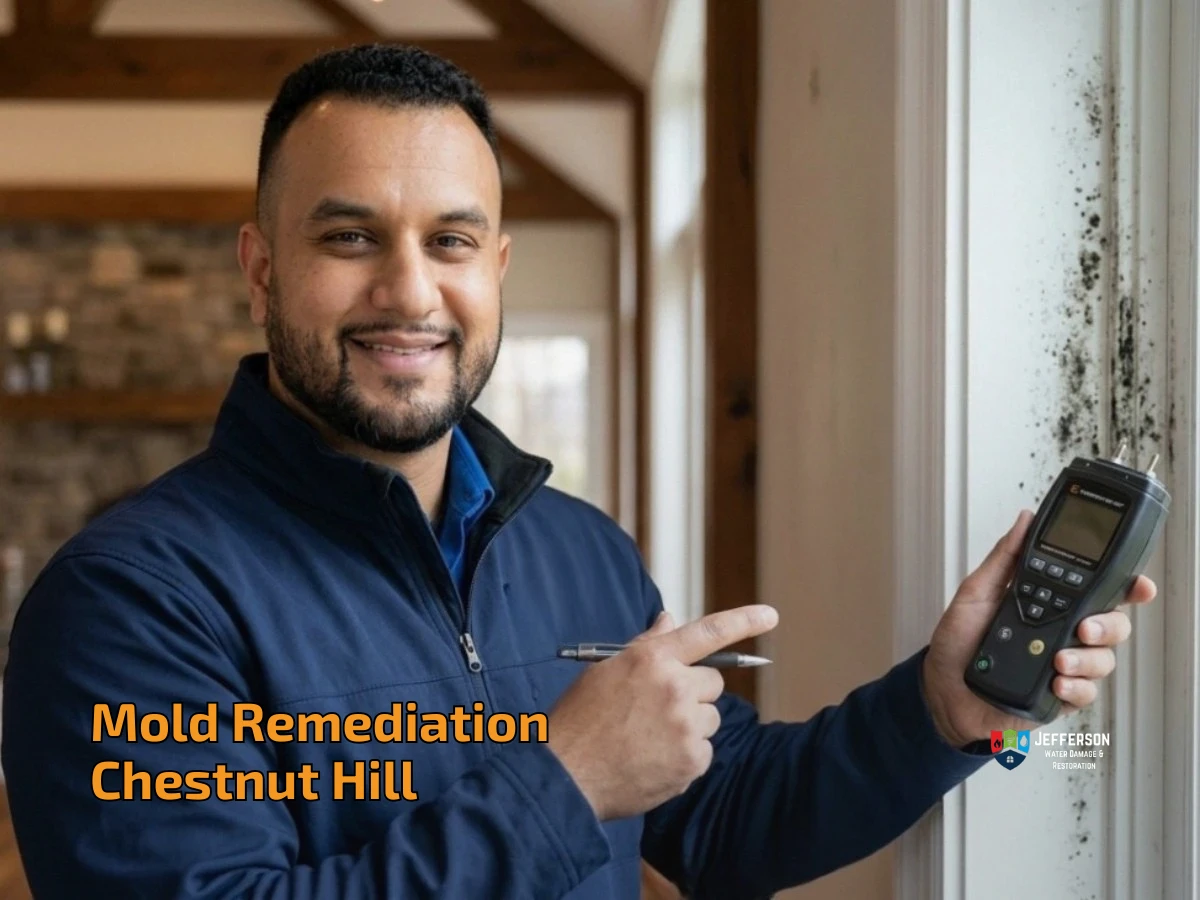
Our free inspection includes moisture readings and a systematic review of the areas most likely to hide mold in Chestnut Hill’s stone and plaster homes.
Built for the housing stock
Common Mold Problems We See in Chestnut Hill
Wissahickon schist and older stone foundations
These walls run thick, and thick stone holds moisture without showing it on the surface for a long time. Moisture readings and thermal imaging are usually the only way to find out what's actually happening inside them.
Plaster walls
Unlike drywall, plaster doesn't develop the same visible surface mold when there's contamination behind it. A wall can look fine and still be hiding a real problem underneath.
Slate roofs
When flashing fails or a slate cracks, water gets into the attic or moves down along the rafter lines. It often shows up as basement or wall moisture with no obvious connection to the roof at all, and older slate can hold enough water to soften the rafters next to it.
Unfinished stone basements
Common in Chestnut Hill's older stone singles and twins. Stone and mortar let moisture seep through, especially after a wet Philadelphia spring or a hard freeze-thaw cycle.
Proximity to the Wissahickon Valley
The western edge of the neighborhood sits against the valley's tree canopy, which keeps local humidity elevated year-round on top of Philadelphia's already high average.
None of this is seasonal. It comes down to how these homes were built and where they sit, which is why a musty basement near Germantown Avenue or a soft patch of plaster in an older twin usually points to something that’s been developing for a while. If you’re not sure whether what you’re seeing is actually mold, our mold inspection team can take a look and tell you.
Built for the housing stock
Real Mold Remediation Project in Chestnut Hill
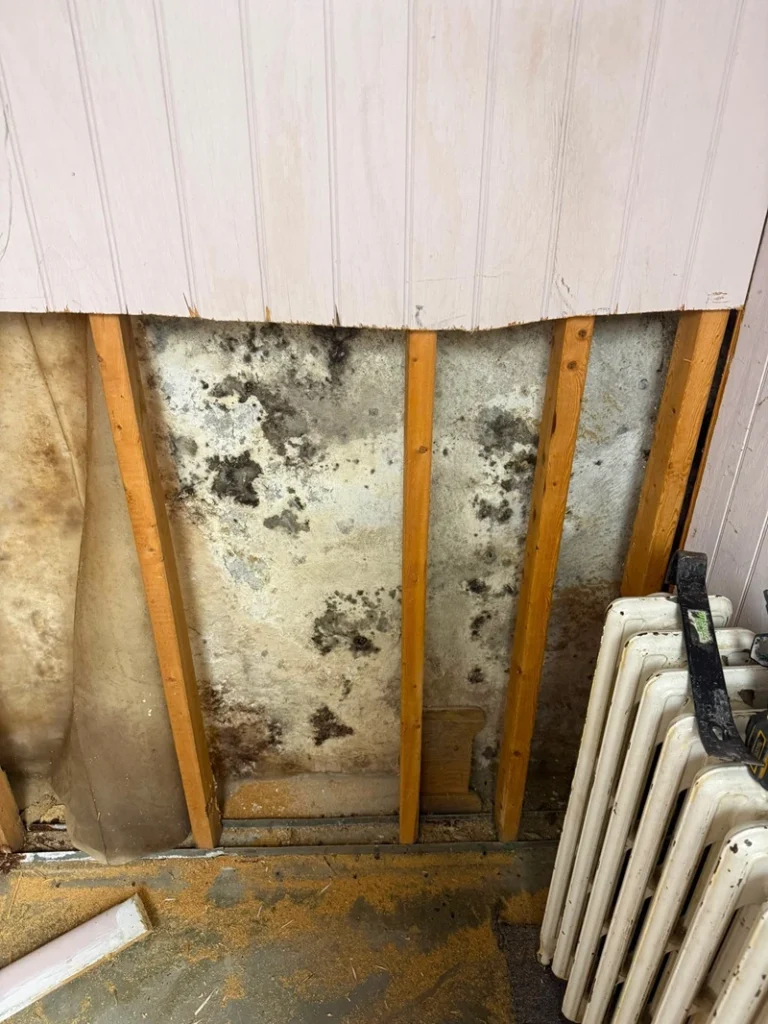
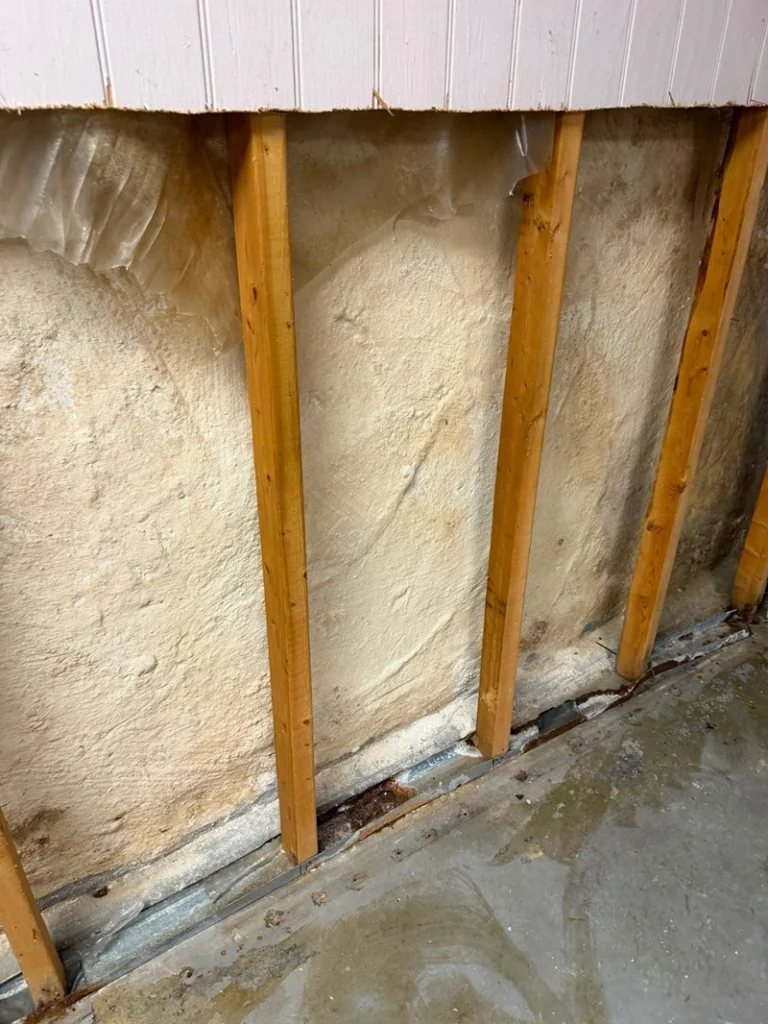
These photos show examples of mold remediation work completed by our team. Every property is different, but our approach remains consistent: identify the moisture source, contain the affected area, remove contaminated materials, clean the space, and restore what was damaged.
One team, from start to finish
Our Mold Remediation Process
We find the full extent of the problem, stop the moisture, contain the work area, remove contaminated material, clean the air, prove the result, and rebuild what was opened.
01
We start with a same-day or 24/7 response
Our team comes to your Chestnut Hill property directly, not a call center reading from a script.
02
Then comes the inspection
Thermal imaging and moisture meters map what’s visible and what’s hidden inside stone, plaster, and framing, since a thick stone wall can hold moisture no eye would catch.
03
We give you a clear assessment
What we found, where the moisture source is, and what the affected area actually looks like. No guesswork, no inflated scope.
04
We contain the area
Plastic sheeting and negative air pressure go up to keep spores from spreading while the work is underway, with HEPA air filtration running throughout.
05
We remove what can't be saved
Materials that won’t clean properly come out. Surfaces that can be treated get treated properly.
06
We document everything
Photos, moisture readings, and a written scope of work, for your own records and for your insurance carrier if you’re filing a claim.
07
We dry and verify before rebuilding anything
The affected area gets confirmed dry before reconstruction starts.
Then we handle the reconstruction. Wall repair, framing, drywall or plaster replacement, finishing. From the first inspection through final repairs, it’s one company, so you’re not coordinating multiple contractors to get your home back together.
Addressing the Moisture Source, Not Just the Mold
Mold is a symptom of a moisture problem. Removing visible growth without correcting what’s feeding it is the most common reason remediation doesn’t hold.
In Chestnut Hill homes, that source is often failing or aging roof flashing, especially around slate or chimney penetrations, foundation seepage through stone or mortar, condensation from an older HVAC system, a plumbing leak hidden inside a thick wall for months, or poor drainage against a stone foundation.
Our leak detection team can trace exactly where the moisture is coming from, not just clean what’s visible.
Correcting the moisture source is critical to reducing the likelihood of mold returning.
One team, from start to finish
Mold Remediation by Property Type in Chestnut Hill
Stone singles and twins
Built from Wissahickon schist, with thick walls that hide moisture well before it's visible. We check foundation walls and adjoining framing together, since the two problems are usually connected.
Victorian, Queen Anne, and Colonial Revival homes
Older finishes and original materials mean remediation work has to account for what's worth preserving, not just what's fastest to remove.
Homes with slate roofs
Roof-related moisture can travel a long way from where it enters before it becomes visible on a wall or ceiling, so we trace the path rather than assuming the closest wall is the source.
Homes mid-renovation
Chestnut Hill's older housing stock means a kitchen or bathroom remodel frequently uncovers hidden moisture damage behind original walls. We can assess it, remediate it properly, and keep your project on track without a full stop. If your contractor already found something behind a wall, our home remodeling team can pick up the reconstruction once remediation is done.
Why Jefferson
IICRC Certified #70209237
Our technicians are trained and certified to industry standards.
60-minute response
Available 24/7. We pick up the phone and can be on-site fast.
We handle your insurance
We work directly with your insurance company and provide Xactimate estimates that adjusters accept.
No hidden fees
Free inspection. Transparent pricing. No surprises on your invoice.
Complete restoration
We rebuild what was damaged. No second contractor needed.
Serving Greater Philadelphia since 2016
Hundreds of homeowners helped across the city and surrounding areas.
Frequently Asked Questions About Mold in Chestnut Hill
Not sure what is behind the wall?
A free inspection can document moisture and help determine whether you need remediation.
How do I know if I have mold behind the plaster walls in my Chestnut Hill home?
Plaster doesn’t always show surface growth the way drywall does, so mold can be present behind the surface without any obvious visual sign. Watch for a persistent musty odor, unexplained moisture stains, or a wall that feels damp or soft in one area.
Our team uses thermal imaging and moisture meters to find hidden moisture inside stone and plaster construction without unnecessary demolition. A free on-site inspection is the most reliable first step.
Can mold come back after remediation?
It can, if the moisture source isn’t corrected. Remediation removes the existing growth and treats affected surfaces, but mold needs moisture to grow. Correcting the moisture source is critical to reducing the likelihood of it returning.
Our team identifies and addresses that source as part of the process, whether it’s a roof flashing failure, foundation seepage, a plumbing leak, or inadequate ventilation.
Does homeowners insurance cover mold remediation in Chestnut Hill?
Coverage depends on your individual policy and the cause of the damage. Sudden and accidental water damage from a plumbing failure may be covered, depending on the circumstances, though gradual moisture intrusion or seepage is typically treated differently by carriers. Your insurance carrier makes the final coverage determination.
We document the damage for your insurance claim, photos, moisture readings, and a detailed scope of work, and we communicate with your adjuster about the restoration work.
My contractor just found mold behind the walls during a renovation. What should I do?
Stop work on the affected area and call us before the renovation continues. This comes up regularly in Chestnut Hill, where older homes often have hidden moisture damage behind original walls that only surfaces once a renovation is underway.
Our team can inspect the area, identify the moisture source, and remediate it properly before your contractor moves forward.
We handle the reconstruction too, so you’re not managing separate vendors to get the project back on track.
How long does mold remediation take in a Chestnut Hill home?
It depends on the size of the affected area and how extensive the moisture damage is. A contained area, one room or one section of a basement, can often be remediated in a day or two.
Larger jobs involving multiple areas or structural materials that need removal and reconstruction take longer.
After the initial inspection, we give you a clear estimate of scope and timeline, so there’s no guessing once we’ve actually seen what’s there.
Do I need a separate mold test before calling a remediation company?
Not necessarily. If you can see or smell mold, testing beforehand usually isn’t required since the presence is already established. Testing matters more when you’re unsure whether what you’re looking at is mold, or when you need independent documentation, before a property sale or for an insurance claim, for example.
Our mold inspection team can provide a formal assessment if that’s what you need.
How much does mold remediation cost in Chestnut Hill?
Smaller, contained projects typically run $1,500 to $3,000. Larger jobs involving multiple rooms or structural repairs can reach $3,000 to $10,000 or more, depending on scope.
Thick stone walls and plaster construction can add time compared to standard drywall, and reconstruction work on a historic home adds to that further. The only way to get an exact number is a free on-site inspection.
What does IICRC certification mean for mold remediation?
The IICRC sets professional standards for restoration work, including protocols specific to mold remediation.
Jefferson Water Damage & Restoration Philadelphia is IICRC Certified #70209237, which means our team follows a documented, established process rather than improvised cleanup.
Nearby Neighborhoods We Also Serve
Passyunk Square, East Passyunk, East Passyunk Crossing, Bella Vista, Point Breeze, Grays Ferry, Queen Village, Dickinson Narrows, West Passyunk, Newbold, Pennsport, Whitman, Graduate Hospital.
ZIP codes: 19112, 19145, 19146, 19147, 19148.
Schedule Your Free Mold Inspection in
Chestnut Hill
Mold does not stop growing while you wait. If you have found mold or noticed signs that suggest it, the right move is an inspection now, not later.
Local team • Fast response • No hidden fees